Real world Robots went first
Every place humans hope to live beyond Earth has been explored by robots first. Rovers have driven across Mars for decades, studying rocks and climate. In 2021, NASA's small Ingenuity helicopter made the first powered, controlled flight on another planet, and went on to fly many more times.
On the International Space Station, the Canadarm2 robotic arm catches cargo ships and moves astronauts, Robonaut 2 tested a humanoid robot in space, and cube-shaped Astrobee robots float around helping with tasks.
Possible future More independent robots
Future robots will need to make more decisions on their own because of communication delays. Artificial intelligence could help them choose where to dig, notice broken equipment and avoid danger. Engineers must decide carefully which decisions robots can make alone and which need a human.
Possible future Why a monument?
People often feel fond of robot explorers: when Mars rovers finally stopped working, many people felt sad. A monument in the settlement would remember the robots that made it possible, and the engineers who built them.
Art In this artwork
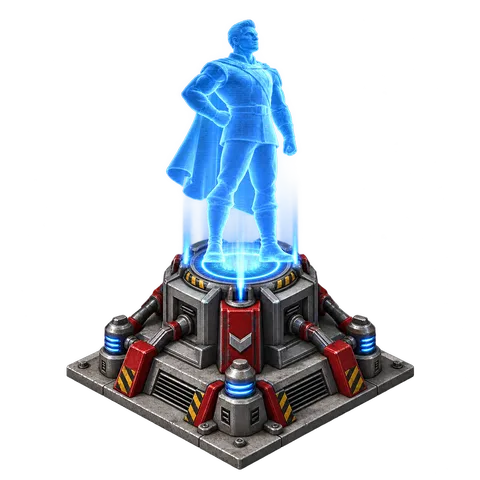
This illustration shows a large robot statue on a high-tech pedestal.
Look closer
- Look at the robot's pose and the shield.
- Find the glowing emblem on the base.
Think about it
- What decisions should a robot be allowed to make on its own?
- Why do people feel attached to robot explorers?
- What job would you give a robot helper?
Key words
- Rover
- A vehicle that drives across another world.
- Artificial intelligence
- Computer systems that can learn and make decisions.
- Humanoid
- Shaped like a human.
Sources
The real-world facts on this page are based on these sources:
- NASA Jet Propulsion Laboratory, Perseverance rover and Ingenuity Mars Helicopter (first powered flight on another planet, 2021)
- NASA and Canadian Space Agency, Canadarm2, Robonaut 2 and Astrobee robots