Possible future The idea
A space elevator would be a cable anchored at the equator and stretching tens of thousands of kilometers up to a counterweight in space. As the planet spins, the counterweight keeps the cable tight. Electric "climbers" would ride up and down, carrying cargo and people into orbit without burning rocket fuel.
Real world Why it is not built yet
On Earth, the cable would need to be far stronger for its weight than any material we can make in long lengths. Carbon nanotubes and graphene are very strong in tiny samples, but making them flawlessly over tens of thousands of kilometers is far beyond today's technology. The cable would also need to survive lightning, storms, space debris and radiation.
Possible future Maybe on the Moon first
Because the Moon's gravity is weaker, a lunar elevator might be possible with materials that exist today, such as strong plastic fibers. Engineers have studied the idea, though it would still be a huge project. Like many great ideas, it may take a long time, or turn out to be impractical.
Art In this artwork
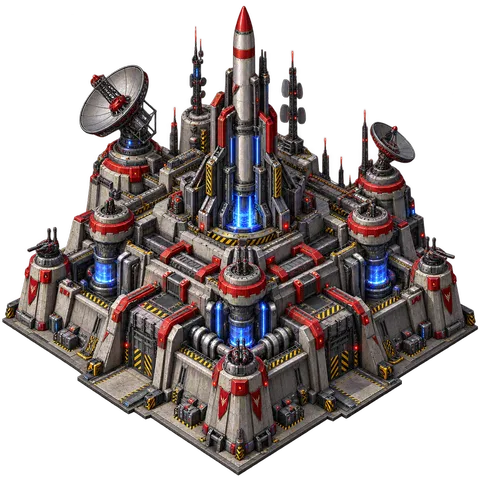
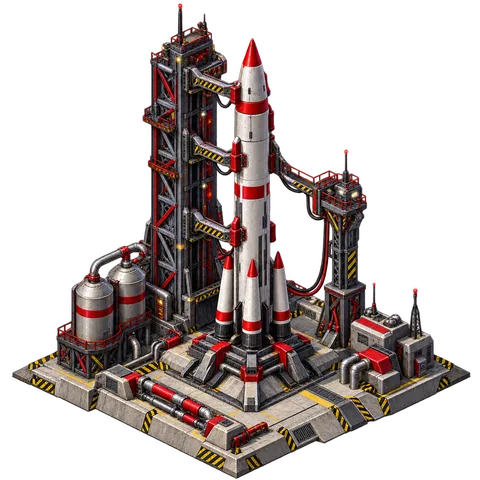
This illustration shows a tall spire with glowing rings. Here we imagine it as the anchor station of a space elevator.
Look closer
- Find the glowing rings near the top.
- Where would the cable start?
Think about it
- Why might a space elevator be easier to build on the Moon than on Earth?
- What would change if getting to space were as easy as a lift ride?
- What other "impossible" ideas later became real?
Key words
- Tether
- A long, strong cable.
- Carbon nanotube
- A tiny tube of carbon atoms that is extremely strong.
- Counterweight
- A weight that balances another.
Sources
The real-world facts on this page are based on these sources:
- Research and review articles on the space elevator concept and the strength of carbon nanotube materials
- Bradley C. Edwards, "The Space Elevator", report for the NASA Institute for Advanced Concepts (2000)