History Not for war
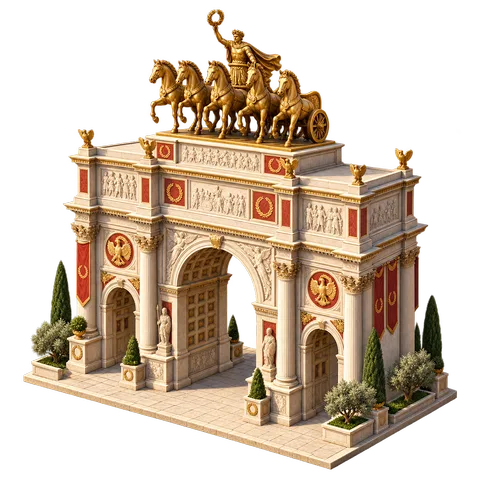
Chariots were used in battle in many ancient lands, but by the time Rome was a great power its armies fought on foot and on horseback, not in chariots. Romans used chariots for two things: racing, and the triumph, a parade for a victorious general who rode through Rome in a decorated chariot.
History Racing chariots
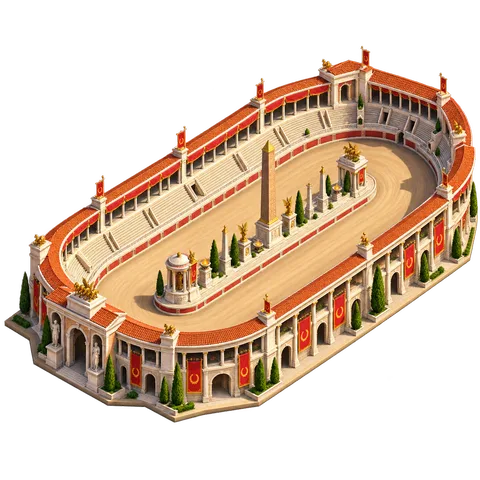
Racing chariots were very light, so the horses could run fast. A chariot pulled by two horses was a biga, and one pulled by four was a quadriga. Drivers wrapped the reins around their bodies and carried a knife to cut themselves free in a crash.
The best drivers became rich and famous. An inscription in Rome honors Gaius Appuleius Diocles, who won 1,462 races in the 2nd century AD and earned a huge fortune in prize money.
Art In this artwork
The driver here wears a soldier's helmet and cloak, which suits a parade more than a race: racing drivers wore leather caps and tunics in their team's color. Real racing chariots were usually pulled by two or four horses.
Look closer
- How many wheels does the chariot have?
- Find the laurel wreath decoration on the side.
Think about it
- Why would a racing chariot need to be very light?
- Which modern sports stars are as famous as Roman charioteers?
- Why might a general want to parade through the city in a chariot?
Key words
- Biga
- A chariot pulled by two horses.
- Quadriga
- A chariot pulled by four horses.
- Auriga
- A chariot driver.
Sources
The history on this page is a short summary based on these sources:
- Encyclopaedia Britannica, "Chariot" and "Triumph"
- Encyclopaedia Britannica, "Circus" and "Chariot racing"
- Inscription honoring the charioteer Gaius Appuleius Diocles (CIL VI 10048), 2nd century AD