History What it was
The Palatine Hill rises above the Roman Forum. In the Republic it was a neighborhood of wealthy homes. The first emperor, Augustus, lived there in a fairly modest house, and later emperors built ever larger palaces until the palace complex covered much of the hill. The word "palace" comes from the name of this hill.
History How it worked
An imperial palace was a home, a government office and a stage for ceremonies all at once. It had private living rooms, gardens and baths for the emperor's family, but also grand reception halls where the emperor met officials and foreign visitors, and banquet halls for huge dinners. Hundreds of officials, guards and enslaved workers kept it running.
The emperor Domitian, at the end of the 1st century AD, built a vast palace on the Palatine with two main parts, one for public business and one for private life, plus a sunken garden shaped like a racetrack.
History The Golden House
After a great fire burned much of Rome in AD 64, the emperor Nero built an enormous new palace called the Domus Aurea, or Golden House, with gardens and an artificial lake. Later emperors filled it in and built over it; the Colosseum stands where its lake once was. Its painted underground rooms can still be visited.
History A palace that became a town
Around AD 300, the emperor Diocletian built a huge palace by the sea at Split, in what is now Croatia, to live in after he retired. Centuries later, people moved inside its strong walls and built homes and shops there. Today the palace is the old town of Split, and about 3,000 people still live within its walls.
Art In this artwork
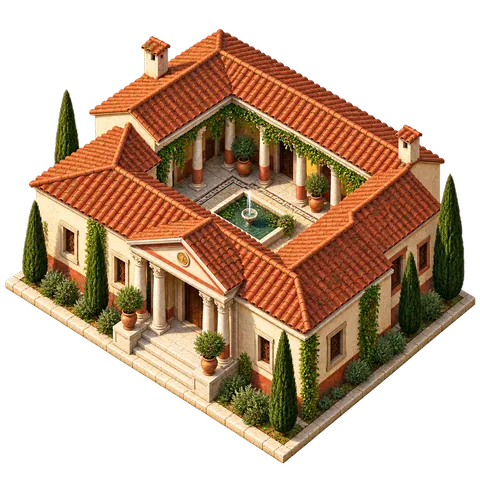
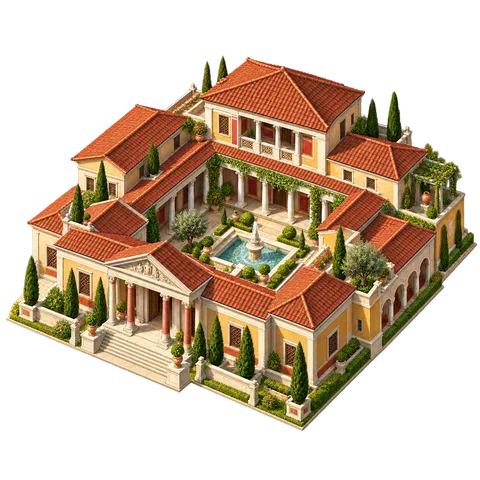
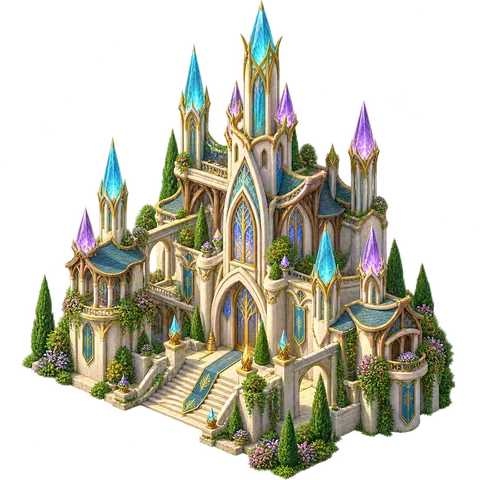
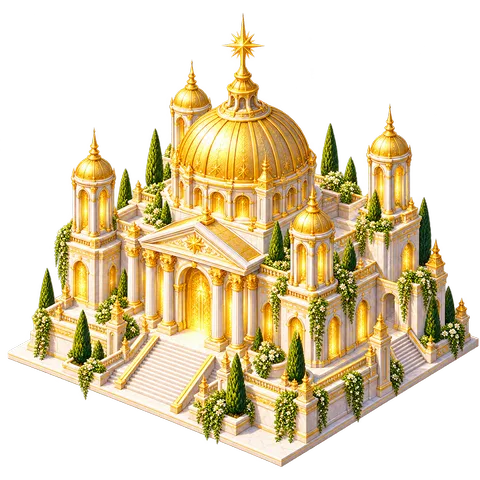
The golden dome and purple banners are the artist's interpretation of imperial luxury, not a copy of a real palace.
Look closer
- Find the golden dome and the purple banners.
- Count the staircases and terraces.
Think about it
- Why might rulers build such huge homes?
- What is the difference between a home and a palace?
- How do leaders today mix home and office?
Key words
- Palatine
- One of Rome's seven hills.
- Domus Aurea
- Nero's "Golden House".
- Purple
- An expensive dye linked with emperors.
Sources
The history on this page is a short summary based on these sources:
- Smarthistory, "The Domus Aurea, Nero's Golden Palace"
- Suetonius, Lives of the Caesars: Augustus, Claudius and Nero
- UNESCO World Heritage Centre, "Historic Center of Rome"
- UNESCO World Heritage Centre, "Historical Complex of Split with the Palace of Diocletian"