
Where people lived
Wealthy families lived in a domus, a private house built around open courtyards. Most people lived in insulae: apartment blocks several stories high with shops on the ground floor. The best apartments were on the lower floors. Upper floors were cheaper, smaller, hotter and more dangerous, especially because of fire.
Water and toilets
Aqueducts brought fresh water into the city, but only wealthy homes had it piped in. Everyone else filled jars at public fountains on street corners. Many people used public latrines: long stone benches with holes, shared by many people at once, with water flowing beneath to carry waste away. Well-preserved latrines can still be seen at Ostia and Pompeii.
Food
Many apartment dwellers had no kitchen, and cooking fires upstairs were dangerous, so people bought hot food from snack bars called thermopolia, which had counters with built-in jars. Bread, porridge, beans, lentils, olives, cheese and fish sauce were everyday foods. For long periods, the government handed out free or cheap grain to many citizens.
The baths
Going to the public baths was part of almost every Roman's day. Entry was cheap. Bathers moved through warm, hot and cold rooms, scraped oil off their skin with a curved tool called a strigil, exercised, met friends and did business.
Questions for students
- Which part of Roman daily life would you find hardest? Why?
- Why were the best Roman apartments on the lower floors, when today the top floors are often the most expensive?
- What modern places do the same jobs as the Roman baths?
Questions students and teachers ask
Did Romans have toilets?
Yes. Wealthy homes sometimes had private latrines, and cities had public latrines with shared seating, flushed by running water from the aqueducts.
Did ancient Romans live in apartments?
Yes. Most people in Rome rented rooms in apartment blocks called insulae, which were several stories high with shops on the ground floor.
What did ordinary Romans eat?
Mostly bread, porridge, beans, lentils, vegetables, olives and cheese, with fish sauce for flavor. Many bought ready-made food from street snack bars.
Building pages to use with this guide
 Ancient RomeApartment block (insula)A building of several floors with shops on the ground floor and rented apartments above, where most city people lived.
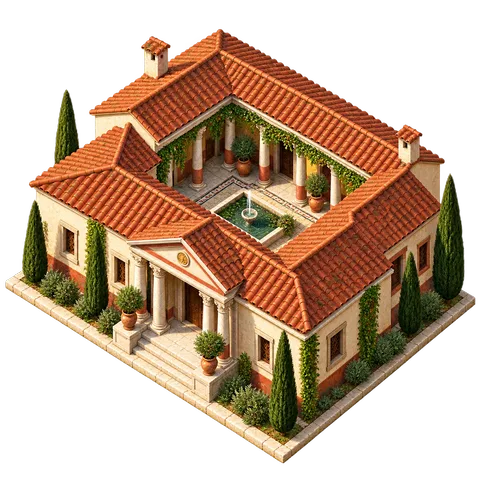 Ancient RomeTown house (domus)A private family house that faced inward, built around open-air halls and gardens.
 Ancient RomeSnack bar (thermopolium)A street counter selling hot food and drinks to people who had no kitchen at home.
 Ancient RomePublic bathsA huge bathhouse with hot, warm and cold pools where Romans washed, exercised, relaxed and met friends.
 Ancient RomePublic fountainA stone basin on a street corner where anyone could collect fresh water from the aqueducts.
 Ancient RomeStreet shop (taberna)A small one-room shop opening straight onto the street, selling food, tools or services.
Sources
The facts in this guide are based on these sources:
- Smarthistory, "Roman domestic architecture: the insula"
- Encyclopaedia Britannica, "Thermae"
- Frontinus, The Aqueducts of Rome (about AD 97)