Imagined What it could do
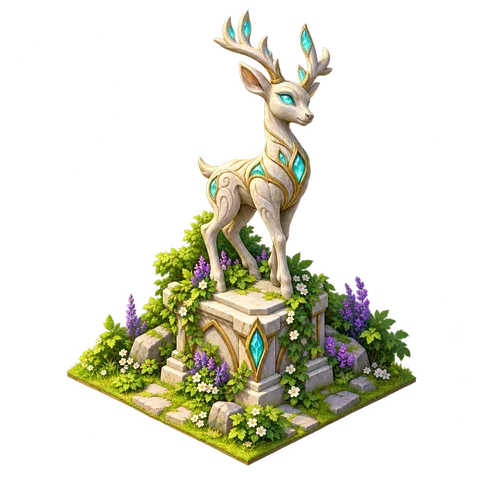
Imagine a great stag carved in white stone, marking the paths where animals have always walked. Elven roads would bend around these paths, or pass beneath them, so that animals could always travel freely.
Real world Roads cut nature in two
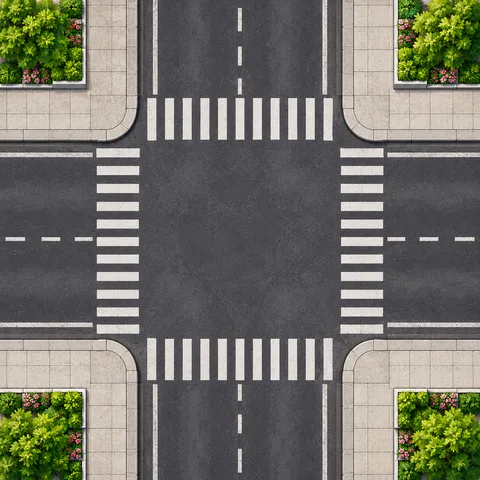
Roads split forests and meadows into separate pieces. Animals trying to cross are hit by vehicles, which is dangerous for drivers too. Animals that cannot cross may be cut off from food, water and mates.
Real world Bridges for animals
In Banff National Park, Canada, the Trans-Canada Highway runs through the mountains. Parks Canada built fences along the road and dozens of crossing structures, including tunnels under the road and wide, planted bridges over it. Parks Canada reports that these reduced wildlife collisions by more than 80 percent, and by over 96 percent for elk and deer. Cameras show grizzly bears, wolves, cougars and moose using them, though shy animals can take years to trust a new crossing.
Art In this artwork
This illustration shows a white stone stag on a carved pedestal, with vines and small blue glass lamps hanging from its antlers.
Look closer
- Look at the vines on the stag's antlers.
- What plants surround the base?
Think about it
- Why might building a bridge for animals also help people?
- Are there places near you where animals try to cross roads?
- How could towns be designed around animal paths?
Key words
- Wildlife corridor
- A strip of habitat that links wild areas.
- Overpass
- A bridge that crosses over a road.
- Fragmentation
- Breaking habitat into separate pieces.
Use it in class
- Sustainable city project ideas for students (Project, grades 5-12)
Sources
The real-world facts on this page are based on these sources:
- Parks Canada, "Making roads safer for wildlife" (Banff National Park crossing structures)
- US Federal Highway Administration, "Wildlife Crossing Structure Handbook" (2011)