Possible future How it would work
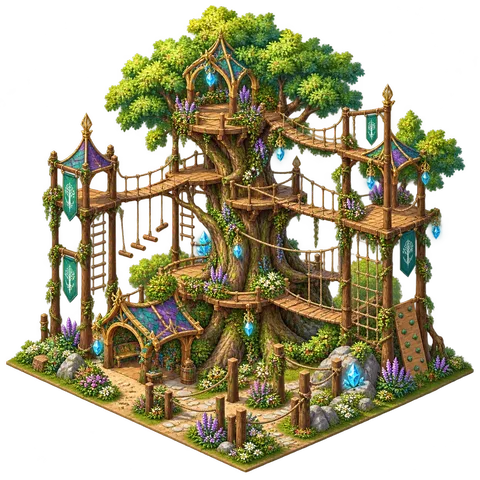
At the heart of the settlement, a real tree would grow in a tall, sealed atrium, with homes and gathering pods arranged around it. It would add oxygen, humidity and green views, but mostly it would remind people of home.
Real world Why nature matters to astronauts
Astronauts living for months on the International Space Station often say how much they enjoy tending plants, and photos of Earth from the station's windows are among their favorite views. Long isolation, small spaces and the same faces every day can be stressful.
Studies on Earth that copy long space missions, such as the 520-day Mars-500 isolation study in Russia (2010-2011) and research at remote Antarctic stations, look at how crews cope. Contact with nature, privacy, light that changes like a day, and meaningful work all seem to help.
Possible future Could a tree grow on Mars?
A tree would need protection from radiation, a sealed room with air, warmth, water, soil and good light, plus space to grow tall in Mars' lower gravity. It would be an expensive luxury, which makes it a good question: how much is wellbeing worth?
Art In this artwork
This illustration shows a great tree with glowing pods built around its trunk and branches.
Look closer
- Find the tree trunk at the center.
- Count the pods around it.
Think about it
- Can technology and nature share the same space?
- What would you bring to remind you of home?
- Is a tree on Mars a luxury or a need?
Key words
- Isolation
- Being cut off from other people and places.
- Analog study
- A study on Earth that copies space conditions.
- Atrium
- A tall, open central space in a building.
Sources
The real-world facts on this page are based on these sources:
- European Space Agency and Institute of Biomedical Problems, Mars-500 isolation study (2010-2011)
- NASA Human Research Program, hazards of human spaceflight (radiation, isolation, distance, gravity, hostile environments)
- NASA, "Veggie" plant growth system on the International Space Station