Real world Why cities need them
More than half of the world's people now live in cities, and the United Nations expects that share to reach about two thirds by 2050. Apartment buildings let many households live on a small piece of land, close to jobs, schools and services.
When more people live close together, it becomes worthwhile to run frequent buses, open local shops and build parks within walking distance. Shared walls also mean apartments usually need less energy to heat than detached houses.
Real world How they are built
Mid-rise apartment buildings are often built with a concrete or steel frame, or increasingly with engineered timber. Floors are stacked one above another, and each apartment is separated by walls and floors designed to block fire and noise.
Building codes require safe ways out in a fire: protected stairways, fire doors that close by themselves, smoke alarms and, in many places, sprinklers. Larger buildings need elevators so that everyone, including people using wheelchairs, can reach every floor.
Real world Living together
Sharing a building means sharing decisions: who cleans the stairs, how to fix the roof, how loud is too loud. Good design helps, with bright entrances, places to store bikes and strollers, courtyards and balconies that give each home some outdoor space.
Art In this artwork
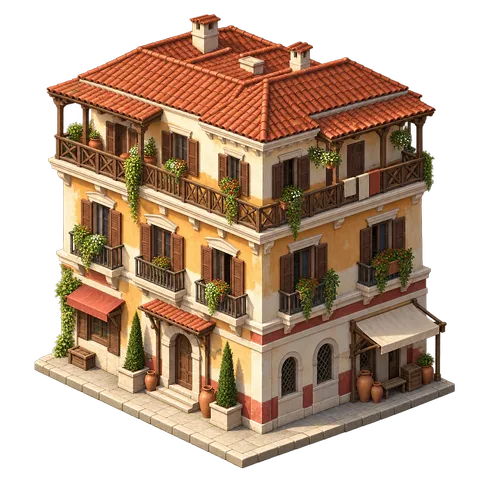
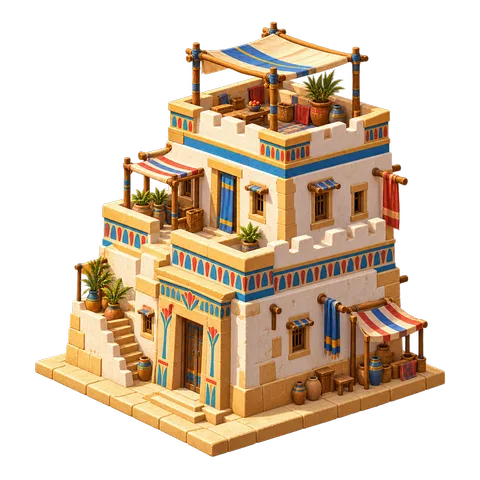
This building is an illustration. The balconies and planting show features that make apartments more pleasant to live in.
Look closer
- Count the balconies.
- Find the main entrance. Is it easy to see and reach?
Think about it
- What would you share with your neighbors if you lived here?
- How do people using wheelchairs or strollers reach the upper floors?
- Why might a bus route be easier to run near apartment buildings?
Key words
- Density
- How many people or homes are in an area.
- Fire separation
- Walls and floors built to stop fire spreading.
- Mid-rise
- A building of about four to twelve floors.
Use it in class
- Ancient Rome vs modern cities: compare and contrast (Lesson, grades 6-12)
Sources
The facts on this page are based on these sources:
- United Nations, Department of Economic and Social Affairs, "World Urbanization Prospects: The 2018 Revision"
- International Code Council, "International Building Code" (overview)
- National Fire Protection Association, information on sprinklers and fire safety in buildings
- US Department of Justice, "2010 ADA Standards for Accessible Design"