History What it was
Roman books were scrolls: long strips of papyrus or parchment rolled around a stick. Wealthy Romans collected private libraries, and from the late 1st century BC public libraries were built in Rome. Emperors added more, often in pairs, one for Greek books and one for Latin. The Forum of Trajan had twin libraries beside Trajan's Column, and some large public baths had libraries too.
History How it worked
Scrolls were kept in wooden cupboards set into niches in the walls. Readers asked library staff for the scrolls they wanted and read them in the hall or nearby colonnades. Every copy was written out by hand, often by trained enslaved scribes, so books were valuable.
History Places you can still see
The Library of Celsus at Ephesus, in modern Turkey, was dedicated around AD 110 in memory of a Roman governor, Celsus. Its two-story marble front has been rebuilt and is one of the most photographed Roman buildings in the world.
At Herculaneum, a villa buried by Mount Vesuvius in AD 79 held a library of scrolls that were turned to charcoal by the heat. Today scientists are using scanning and computer techniques to read some of them without unrolling them.
Art In this artwork
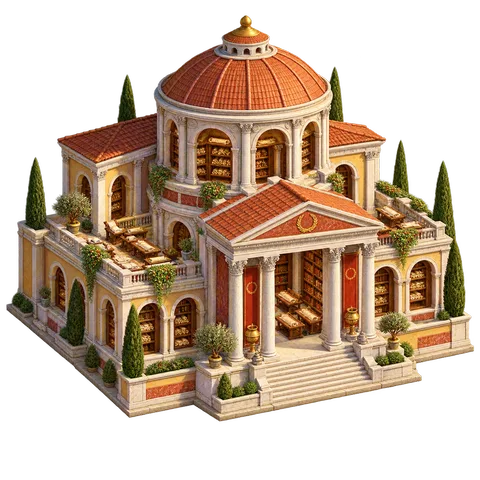
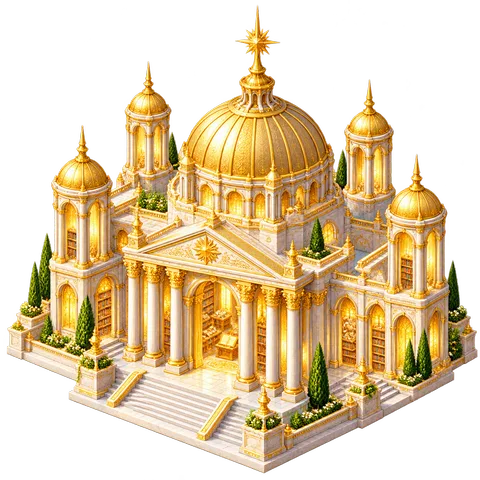
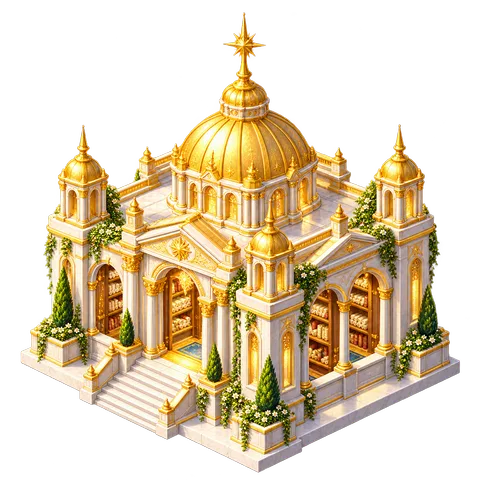
This domed building with shelves of scrolls is the artist's interpretation of a library.
Look closer
- Find the shelves of scrolls through the arches.
- Notice the dome on top.
Think about it
- How would it change things if every book had to be copied by hand?
- Who could use a public library in Rome? Who can use yours?
- Why might emperors build libraries?
Key words
- Scroll
- A long rolled-up sheet used as a book.
- Papyrus
- A paper-like material made from a river plant.
- Scribe
- Someone who copies texts by hand.
Sources
The history on this page is a short summary based on these sources:
- Encyclopaedia Britannica, "Ephesus"
- UNESCO World Heritage Centre, "Ephesus"
- UNESCO World Heritage Centre, "Archaeological Areas of Pompei, Herculaneum and Torre Annunziata"