History What it was
Olive trees grow well in the hot, dry summers of the Mediterranean and can live for hundreds of years. Olive oil was one of the most important products of the Roman world, alongside grain and wine.
History How oil was made
- Olives were picked or shaken from the trees in late autumn and winter.
- They were crushed in a stone mill to make a paste.
- The paste was squeezed in a press to release oil and water.
- The oil was left to separate from the water, then stored in jars.
History Oil in everyday life
Romans used olive oil for cooking and eating, as fuel in clay lamps to light their homes, and at the baths to clean their skin. It was also used in medicines and perfumes.
Huge amounts of oil were shipped to Rome from Spain and North Africa in clay jars. Once empty, the jars were hard to reuse, so they were broken and piled up near the river warehouses. Over centuries the pieces formed Monte Testaccio, an artificial hill of pottery that still stands in Rome.
Art In this artwork
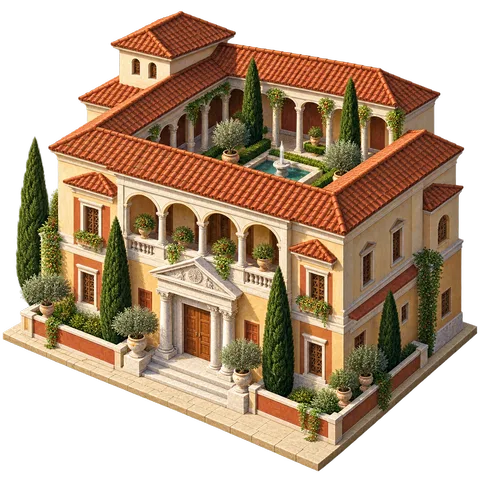
This grove is an illustration. Real olive groves were usually planted in neat rows across hillsides.
Look closer
- Notice the silvery-green leaves and twisted trunks.
- What other plants grow among the trees?
Think about it
- How many different uses for olive oil can you think of?
- Why might a tree that lives for centuries be valuable to a farming family?
- What happens to packaging today when it is empty?
Key words
- Grove
- A small group of trees.
- Press
- A machine for squeezing out liquid.
- Amphora
- A two-handled clay jar.
Sources
The history on this page is a short summary based on these sources:
- Cato the Elder, On Agriculture; Columella, On Agriculture
- Smarthistory, "Ostia: an introduction"