History A city built in a hurry
Around 1346 BC, King Akhenaten built a new capital, Akhetaten, now called Amarna, in honor of the sun disk, the Aten. Soon after his death the city was abandoned, so its houses were never built over. This gives archaeologists a rare view of a whole Egyptian city.
History Inside a villa
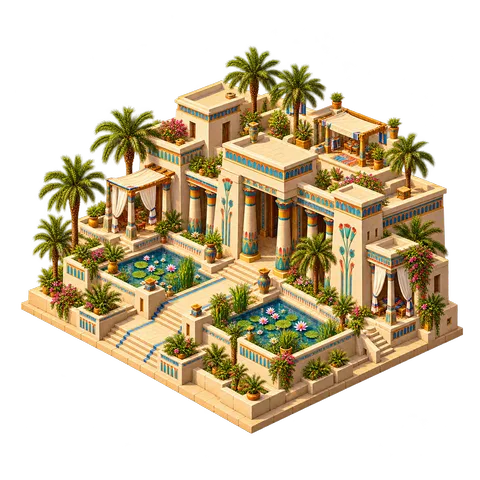
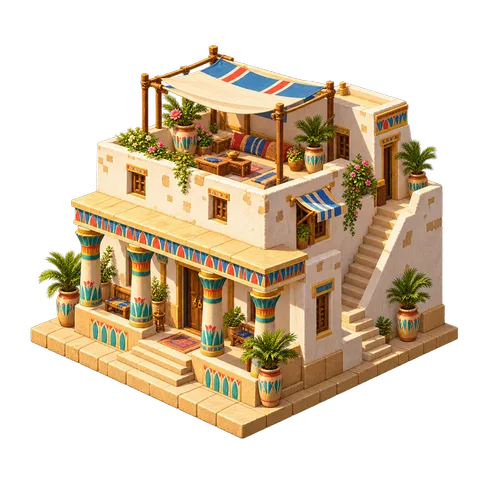
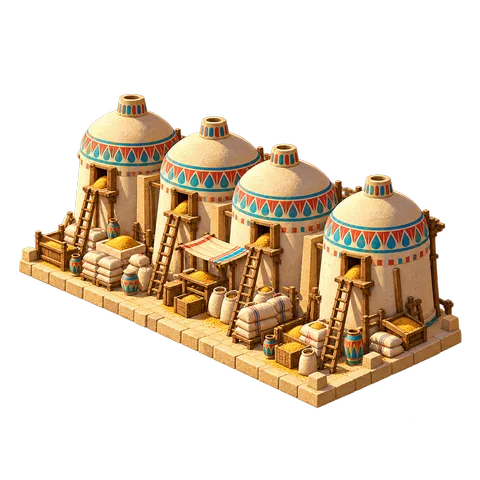
Wealthy families at Amarna lived in walled compounds. The house had a tall central room with high windows, bedrooms and even a bathroom, with a stone slab for washing and a toilet seat. Around it stood a well, a garden, round granaries, stables, kitchens and rooms for servants.
History A queen in a workshop
In 1912, archaeologists digging at Amarna found the painted bust of Queen Nefertiti, Akhenaten's wife, in the house and workshop of a sculptor named Thutmose. It had been left behind when the city was abandoned. Today it is in the Neues Museum in Berlin.
Art In this artwork
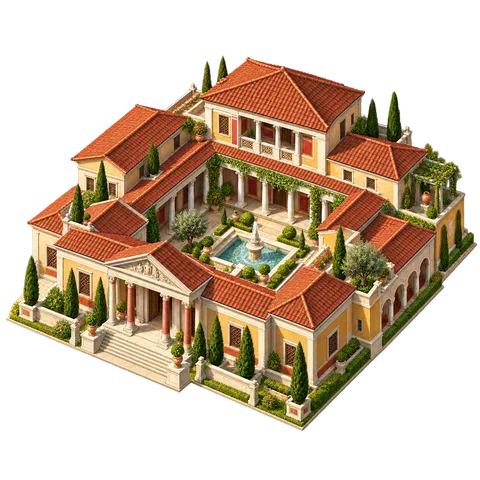
The illustration shows a large villa built around a courtyard with a lotus pool and palms.
Look closer
- Find the pool in the courtyard.
- How many different buildings can you see inside the walls?
Think about it
- Why might a rich family want everything inside its own walls?
- Why is an abandoned city so useful to archaeologists?
- What would you put in your own courtyard?
Key words
- Villa
- A large house, often with gardens.
- Compound
- A group of buildings inside one wall.
- Courtyard
- An open space surrounded by buildings or walls.
Sources
The history on this page is a short summary based on these sources:
- Encyclopaedia Britannica, "Tell el-Amarna"
- Barry Kemp, The City of Akhenaten and Nefertiti: Amarna and Its People (2012)
- Ian Shaw (editor), The Oxford History of Ancient Egypt (2000)