History The good life
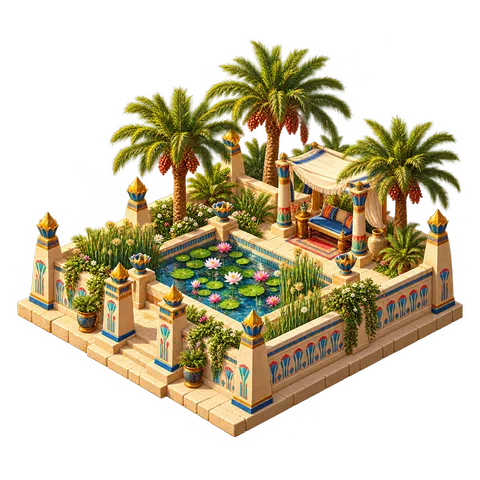
A wooden model from the tomb of the official Meketre, now in New York's Metropolitan Museum of Art, shows a porch with painted columns looking out over a pool surrounded by sycamore fig trees. It was made so that Meketre could enjoy his garden forever.
History A home for the next life
Egyptians hoped the next life would be like the best of this one. A painted scroll called the Book of the Dead of Nakht, in the British Museum, shows Nakht and his wife beside their house and garden pool, a picture of the life they hoped to go on enjoying after death.
History Food from the garden
Gardens fed the family as well as giving shade. Egyptians grew grapes for wine and raisins, figs, dates and, later, pomegranates, with vegetables such as onions, leeks, lettuce and cucumbers, all watered by hand from a pool or a well.
Art In this artwork
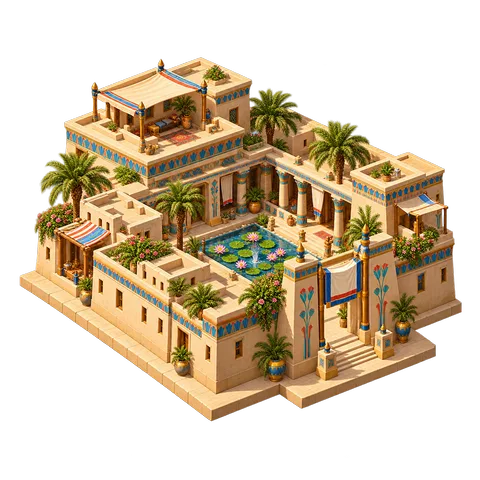
The illustration shows a large villa with whitewashed walls, a palm garden, two lotus pools and shady columned porches.
Look closer
- Find the two pools.
- Where would you sit to stay out of the sun?
Think about it
- What does a dream home tell us about what people value?
- Why might someone want a model of their garden in their tomb?
- What would your dream home look like?
Key words
- Noble
- A person of high rank.
- Pomegranate
- A round fruit full of juicy red seeds.
- Book of the Dead
- A collection of spells meant to help the dead in the next life.
Sources
The history on this page is a short summary based on these sources:
- The Metropolitan Museum of Art, models from the tomb of Meketre (granary, garden and boats), about 1980 BC
- British Museum, the Book of the Dead of Nakht (EA 10471)
- British Museum, paintings from the tomb-chapel of Nebamun (garden pool, banquet and marsh hunt)
- Ian Shaw (editor), The Oxford History of Ancient Egypt (2000)