History Learning to write
Egyptian writing had hundreds of signs. Hieroglyphs were carved and painted on monuments; for everyday writing, scribes used a quicker, joined-up script called hieratic. Students copied texts over and over with reed pens and black or red ink, on flakes of limestone and pieces of broken pottery, because papyrus was expensive. Many of these practice pieces survive, mistakes and all.
History Be a scribe!
Scribes counted harvests, recorded taxes, wrote letters and planned building work, so they were respected and rarely did hard labor. A famous school text, the Satire of the Trades, told students how miserable other jobs were, from the potter covered in mud to the washerman, so that they would work hard at their writing.
A painted statue known as the Seated Scribe, made around 2500 BC and now in the Louvre in Paris, shows a scribe sitting cross-legged with a papyrus roll open on his lap, ready to write.
Art In this artwork
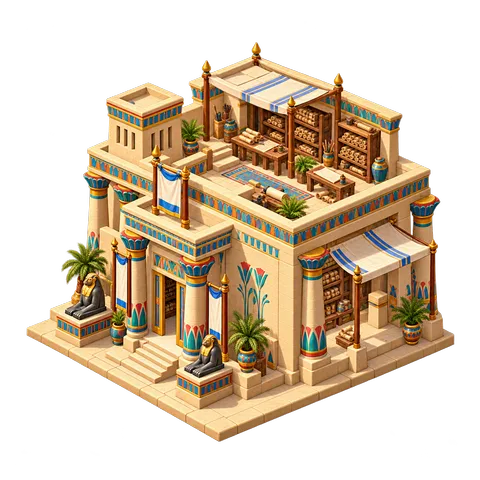
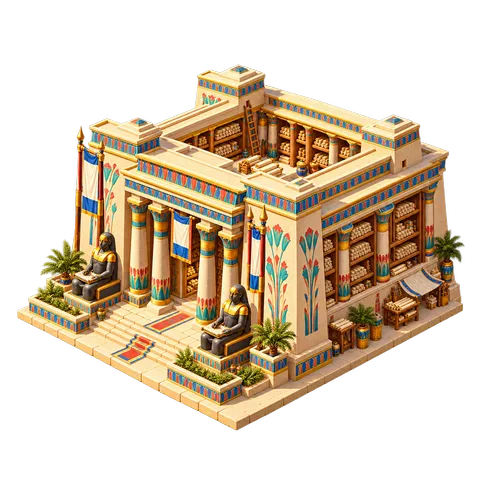
The illustration shows a small mud-brick school with a shaded courtyard, low desks and scrolls. Lessons could also take place in a temple or an office, with one scribe teaching a few students.
Look closer
- Find the low desks.
- Where would students sit in the shade?
Think about it
- Why might only a few people learn to write?
- Why did students practice on broken pottery instead of papyrus?
- Which jobs today depend on reading and writing?
Key words
- Scribe
- A person whose job was writing and keeping records.
- Hieratic
- A quick, joined-up form of Egyptian writing.
- Ostracon
- A piece of pottery or stone used for writing (plural ostraca).
Use it in class
- What was daily life like in ancient Egypt? (Explainer, grades 3-8)
Sources
The history on this page is a short summary based on these sources:
- Encyclopaedia Britannica, "Scribe" and "Hieratic script"
- The Instruction of Khety ("The Satire of the Trades"), Middle Kingdom
- Smarthistory, "Seated Scribe"
- Ian Shaw (editor), The Oxford History of Ancient Egypt (2000)