History Guards at the gate
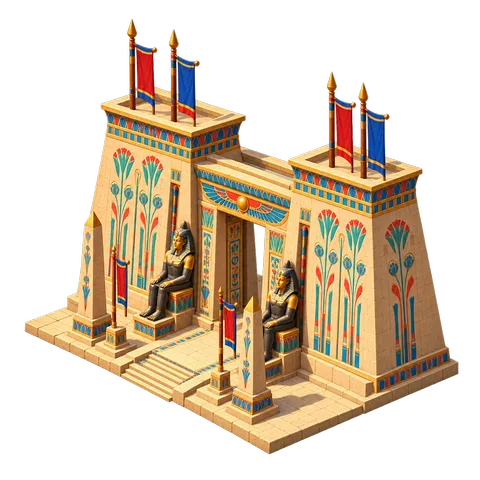
Kings often set giant statues of themselves at temple entrances. The most famous pair, now called the Colossi of Memnon, shows King Amenhotep III seated on his throne. They guarded the entrance to his huge memorial temple on the west bank of the Nile at Thebes. The temple behind them was almost entirely destroyed by floods and later builders, but the statues survived.
History The singing statue
After an earthquake in 27 BC cracked one of the statues, it began to make a sound at dawn, perhaps as the stone warmed and dried in the morning sun. Greek and Roman visitors came to hear it and named it after Memnon, a hero of Greek legend who greeted his mother, the goddess of the dawn. Some visitors carved poems on its legs. After the statue was repaired, around AD 200, it fell silent.
Art In this artwork
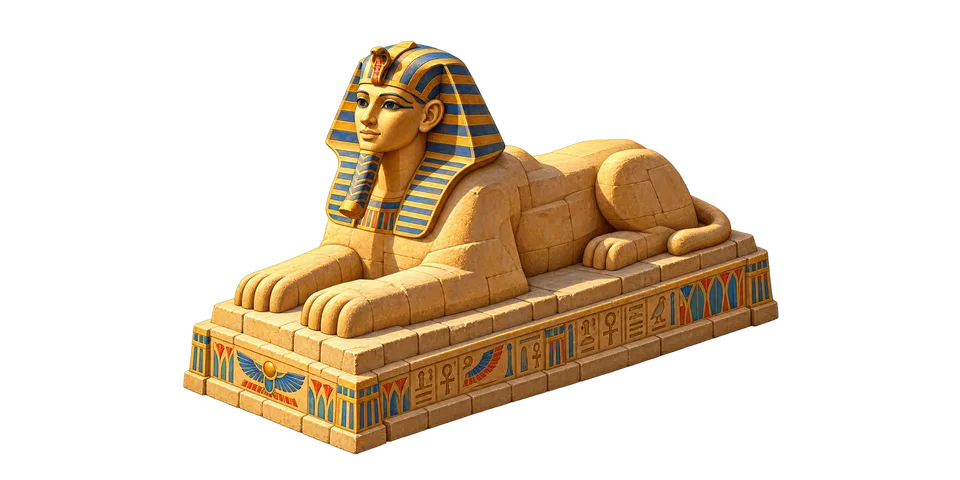
The illustration shows two seated kings in striped headcloths on a shared base. The real Colossi are weathered and stand apart, each on its own base.
Look closer
- Find the kings' hands. Where are they resting?
- Compare the statues with the doorway beside them.
Think about it
- Why would a king want giant statues of himself?
- Why might the statues have survived when the temple did not?
- What do statues in your town tell visitors?
Key words
- Colossus
- A statue much larger than life (plural colossi).
- Memorial temple
- A temple where a king was honored after his death.
- Inscription
- Words carved into stone.
Sources
The history on this page is a short summary based on these sources:
- Encyclopaedia Britannica, "Colossi of Memnon"
- UNESCO World Heritage Centre, "Ancient Thebes with its Necropolis"
- Richard H. Wilkinson, The Complete Temples of Ancient Egypt (2000)