History A forest of stone
A hypostyle hall is a hall whose roof rests on rows of columns. The greatest of them all is in the temple of Amun at Karnak, in the ancient city of Thebes (modern Luxor). Its 134 columns stand in 16 rows. The 12 along the middle are about 21 meters tall, with tops shaped like open papyrus flowers.
The hall was begun by King Seti I and finished by his son, Ramesses II. Its walls and columns are covered with carvings of the king and the gods, and traces of the original bright paint survive high up.
History A marsh made of stone
Egyptians believed the world began as a mound of land rising from water. Columns shaped like papyrus plants turned the hall into a stone version of a Nile marsh. The middle columns were taller than the others, so stone window grilles high above the floor could let in light while the rest of the hall stayed dim.
Art In this artwork
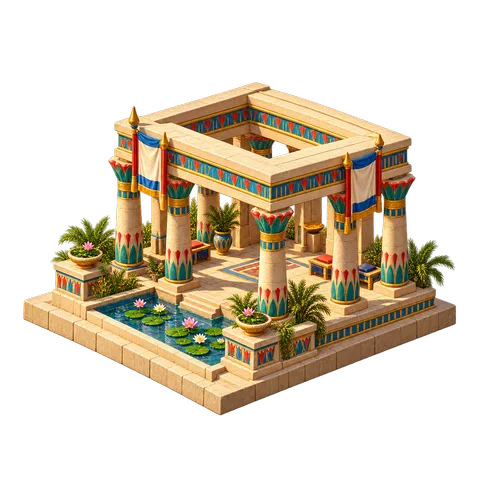
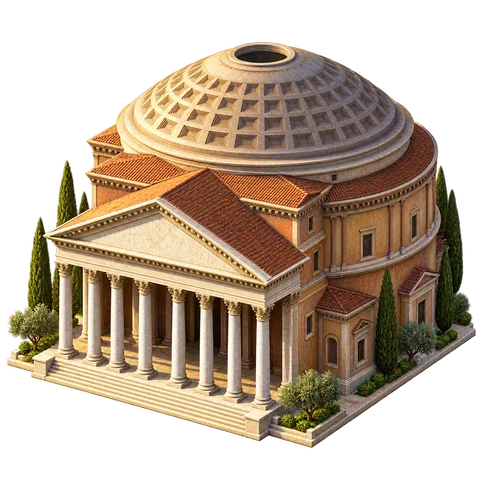
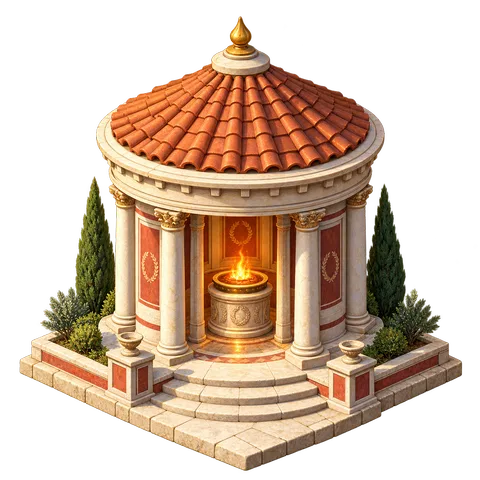
The illustration shows a smaller hall with painted columns and its roof partly open to the sun. The real hall at Karnak is mostly roofless today, because its stone roof fell in long ago.
Look closer
- Look at the tops of the columns. What plant do they look like?
- Find where the sunlight comes in.
Think about it
- How does a building feel when it is full of tall columns?
- Why might temple builders want parts of a temple to be dim?
- What shapes from nature do buildings near you copy?
Key words
- Hypostyle
- A hall whose roof rests on many columns.
- Capital
- The top part of a column.
- Papyrus
- A tall reed that grew in Nile marshes.
Sources
The history on this page is a short summary based on these sources:
- Encyclopaedia Britannica, "Karnak"
- University of Memphis, Karnak Great Hypostyle Hall Project
- Smarthistory, "Temple of Amun-Re and the Hypostyle Hall, Karnak"
- UNESCO World Heritage Centre, "Ancient Thebes with its Necropolis"