History What it was
The Pantheon was a temple in the center of Rome. Its name comes from Greek words meaning "all the gods". The building standing today was begun under the emperor Trajan and completed under Hadrian in the early 2nd century AD. The inscription on the front names Marcus Agrippa, who built an earlier temple on the same spot more than a century before.
History How it worked
The Pantheon has a traditional columned porch at the front, but behind it is a huge round hall covered by a dome. The dome is about 43 meters across, the same as the height from the floor to the top, so a giant ball could fit perfectly inside.
The dome is made of Roman concrete. Builders used heavier stone in the concrete near the bottom and lighter volcanic stone near the top to reduce the weight. Sunken square panels, called coffers, cut into the inside of the dome also make it lighter.
At the top is the oculus ("eye"), an open circle about 9 meters wide. It is the building's main source of direct light, and a circle of sunlight moves around the walls as the day passes. When it rains, water falls in and drains away through small holes in the gently sloping floor.
History Why it survived
In AD 609 the Pantheon was turned into a church, which meant it was cared for when many other ancient buildings were taken apart for stone. Nearly 1,900 years after it was built, it remains one of the largest unreinforced concrete domes in the world.
Art In this artwork
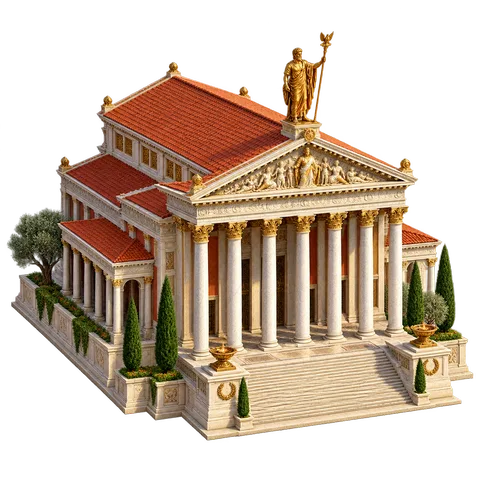
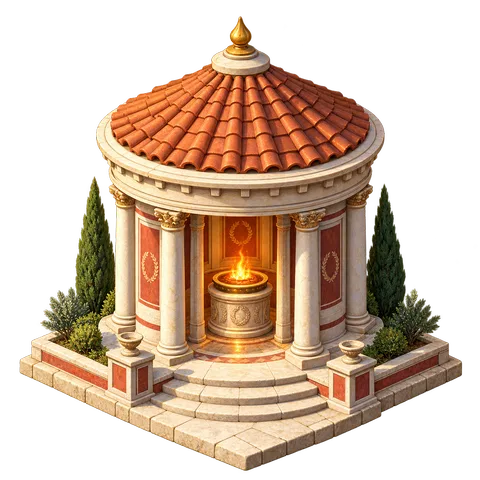
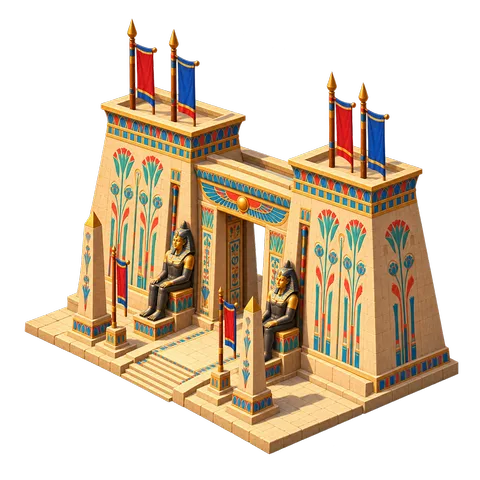
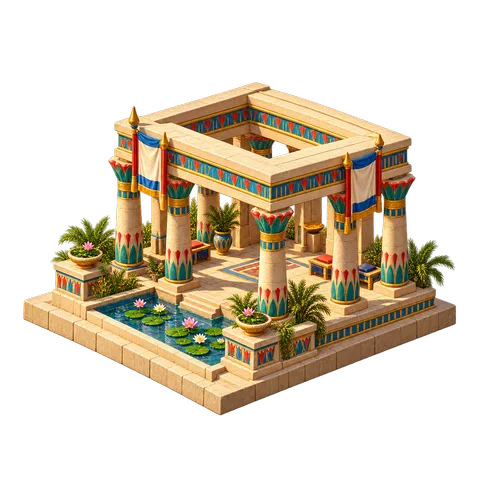
This temple is inspired by the Pantheon but is not an exact copy. The garden setting is imagined.
Look closer
- Look at the very top of the dome.
- Compare the square porch with the round building behind it.
Think about it
- How else could a building without windows let in light?
- Why might builders use lighter material at the top of a dome?
- Why do you think this building has lasted so long?
Key words
- Dome
- A rounded roof like half a ball.
- Oculus
- A round opening at the top of a dome.
- Coffer
- A sunken panel in a ceiling.
Use it in class
- Roman engineering: arches, concrete, roads and domes (Lesson, grades 6-10)
Sources
The history on this page is a short summary based on these sources:
- Smarthistory, "The Pantheon, Rome"
- Encyclopaedia Britannica, "Pantheon"
- Encyclopaedia Britannica, "Pozzolana" and "Concrete"