Imagined What it could do
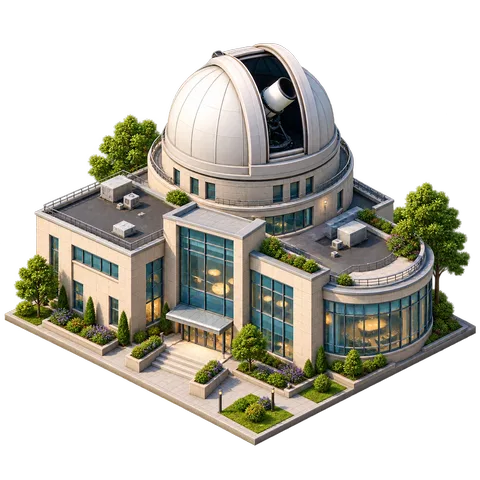
Imagine a glass dome at the edge of the forest where elves watch the stars, keep a calendar of the seasons and teach children the patterns of the night sky.
Bible The heavens declare
"The heavens declare the glory of God; the skies proclaim the work of His hands" (Psalm 19:1). Another psalm says that God "determines the number of the stars; He calls them each by name" (Psalm 147:4).
Real world The lost night sky
Bright outdoor lights make the sky glow, hiding all but the brightest stars. Many people living in cities have never seen the Milky Way. This light pollution also confuses wildlife: migrating birds can be drawn to lit buildings, newly hatched sea turtles may head toward lights instead of the sea, and many insects circle lamps until they are exhausted.
Real world Bringing back the dark
DarkSky International, founded in 1988, works to reduce light pollution. In 2001, Flagstaff, Arizona, became the first International Dark Sky City, thanks to rules on outdoor lighting. Simple changes help:
- Shield lights so they point down, not up into the sky.
- Use only as much light as needed, only when needed.
- Choose warmer-colored lights, which disturb wildlife less.
- Turn off decorative lighting late at night.
Art In this artwork
This illustration shows a turquoise glass dome on a stone tower surrounded by forest.
Look closer
- Find the glass dome at the top.
- How might lights inside affect the view of the stars?
Think about it
- When did you last see the Milky Way?
- How could your street have less light pollution and still be safe?
- Why might animals need darkness?
Key words
- Light pollution
- Too much artificial light at night.
- Shielded light
- A lamp covered so that light shines down.
- Milky Way
- Our galaxy, seen as a band of stars.
Sources
The real-world facts on this page are based on these sources:
- DarkSky International (formerly the International Dark-Sky Association)
- Fabio Falchi and colleagues, "The new world atlas of artificial night sky brightness", Science Advances (2016)
- The Bible, Psalms