Real world Why radio astronomy?
Stars, galaxies and the leftover glow of the Big Bang give off radio waves as well as light. Radio telescopes collect them with large dishes or arrays of antennas, revealing things invisible to the eye, such as the cold gas that forms stars.
On Earth, radio telescopes struggle with interference from phones, TV, radar and satellites, and our atmosphere blocks some of the lowest radio frequencies.
Real world The quiet side of the Moon
The Moon always shows the same face to Earth, so its far side is shielded from Earth's radio noise by the Moon itself. In 2019 China's Chang'e 4 made the first soft landing on the far side, sending its data home through a relay satellite called Queqiao. Scientists have proposed building radio telescopes there to listen to the early universe.
Possible future Building and maintaining it
One idea is to use robots to string a huge wire-mesh dish across a natural crater. Another is to spread hundreds of small antennas across the ground. It would need a relay satellite to send data to Earth and must survive the two-week lunar night.
Art In this artwork
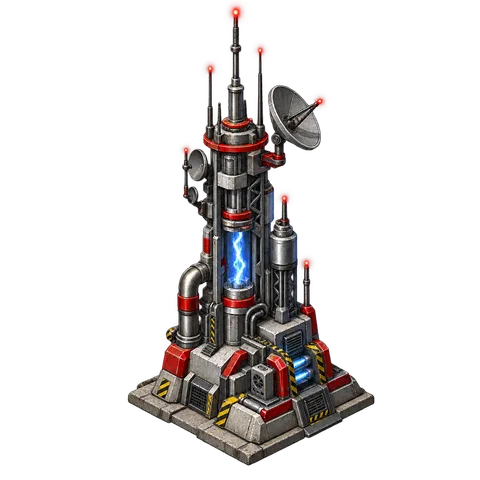
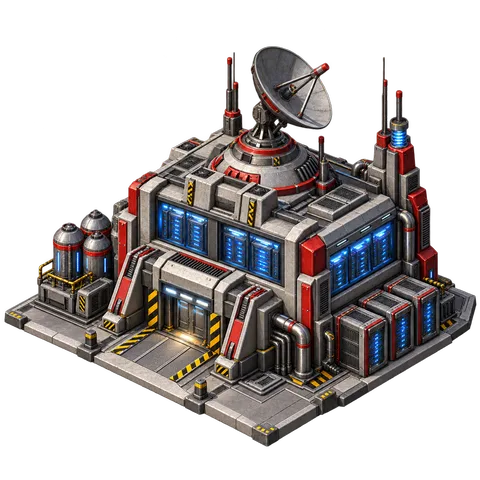
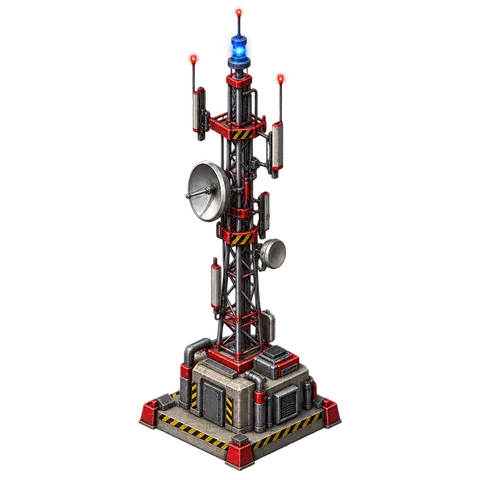
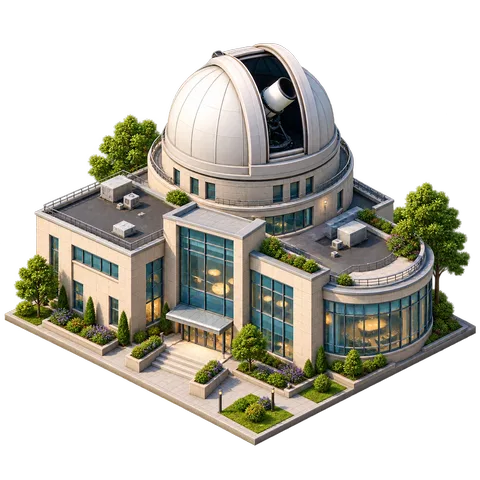
This illustration shows a large radio dish on a high-tech base.
Look closer
- Which way is the dish pointing?
- Find the smaller dishes and antennas.
Think about it
- Why might a city spend money on looking at space?
- What makes the far side of the Moon so quiet?
- What questions about the universe would you want answered?
Key words
- Radio telescope
- A telescope that detects radio waves.
- Interference
- Unwanted signals that get in the way.
- Far side
- The side of the Moon that always faces away from Earth.
Sources
The real-world facts on this page are based on these sources:
- China National Space Administration, Chang'e 4 far-side landing (2019) and Queqiao relay satellite
- NASA, "Deep Space Network" and Mars relay orbiters