Imagined What it could do
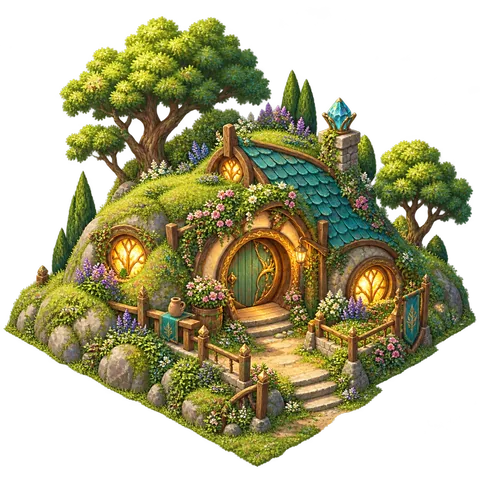
Imagine a cottage whose roof is a meadow, where bees hum among flowers and rain is drunk by plants instead of rushing down gutters. In summer the plants keep the rooms below cool; in winter the soil helps keep warmth in.
Real world Real green roofs
A green roof is a roof covered with plants growing in a thin layer of special soil. Cities around the world, especially in Germany, Switzerland and Scandinavia, have encouraged them. The US Environmental Protection Agency explains that green roofs can be much cooler than ordinary dark roofs on hot days, helping fight the urban heat island effect.
- They hold rainwater and release it slowly, reducing flooding.
- They protect the roof from sun damage, so it can last longer.
- They provide food and shelter for insects and birds.
- They make a city more pleasant to look at.
Real world How a green roof is built
From the bottom up: a strong roof deck, a waterproof layer, a root barrier, a drainage layer, a filter fabric, a lightweight growing medium, then the plants. Hardy, low-growing plants such as sedums are common because they survive drought. Engineers must check that the roof can carry the extra weight of wet soil.
Art In this artwork
This illustration shows a tall timber cottage with a purple slate roof and plants climbing its walls. Here we imagine its roof as a living garden.
Look closer
- Find the plants growing on the walls and roof edge.
- Where would rainwater go?
Think about it
- How could gardens on roofs help a city?
- Why might a green roof be harder to build than an ordinary one?
- Which buildings near you could have a green roof?
Key words
- Green roof
- A roof covered with growing plants.
- Runoff
- Rainwater that flows over surfaces instead of soaking in.
- Sedum
- A tough, low-growing plant often used on green roofs.
Use it in class
- Sustainable city project ideas for students (Project, grades 5-12)
Sources
The real-world facts on this page are based on these sources:
- US Environmental Protection Agency, "Green Infrastructure": rain gardens and green roofs
- US Environmental Protection Agency, "Heat Island Effect" and "Using Trees and Vegetation to Reduce Heat Islands"