Possible future How it would work
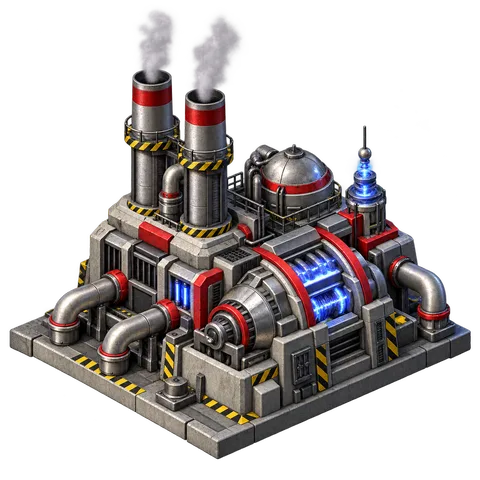
Every breath a person takes uses oxygen and adds carbon dioxide. In a sealed home, both must be managed all the time. A life support dome would hold the machines that make oxygen, scrub carbon dioxide, filter dust and germs, control humidity and keep the temperature steady.
Real world How the space station does it today
On the International Space Station, the Environmental Control and Life Support System (ECLSS) makes oxygen by splitting water into hydrogen and oxygen using electricity, a process called electrolysis. Carbon dioxide is removed by special materials that absorb it, and some of it is combined with the leftover hydrogen to make water again.
Fans keep air moving, because in weightlessness warm air does not rise and carbon dioxide can build up around a sleeping astronaut's face.
Possible future Maintaining it
Life support must never fail, so critical parts are doubled or tripled. Crews carry spare parts, track every filter, and practice emergencies such as fires, leaks and toxic spills. On Mars, where resupply could take many months, crews would need to repair almost anything themselves.
Art In this artwork
This illustration shows a cluster of linked domes with glowing windows and pipes. Here we imagine it as the settlement's life support center.
Look closer
- Follow the pipes between the domes.
- Which dome would you put the backup machines in?
Think about it
- Sealed homes control air and temperature. What might residents miss?
- Why is it important to have backups for life support?
- How is the air in your classroom kept fresh?
Key words
- Life support
- Systems that keep people alive in a hostile place.
- Electrolysis
- Splitting a substance using electricity.
- Redundancy
- Having spare systems in case one fails.
Use it in class
- Design a city: a project-based unit for grades 5 to 9 (Project, grades 5-9)
- What does a city need to work? (Explainer, grades 3-9)
- Design a Mars colony: a student project (Project, grades 5-12)
- How do astronauts live on the International Space Station? (Explainer, grades 3-12)
Sources
The real-world facts on this page are based on these sources:
- NASA, "Environmental Control and Life Support System" and the 2023 announcement of 98% water recovery on the International Space Station
- NASA Human Research Program, hazards of human spaceflight (radiation, isolation, distance, gravity, hostile environments)