
Mission brief
Your team must plan a settlement for 20 people to live on Mars for two years. Supplies from Earth arrive only every 26 months. Choose a landing site, plan the buildings and systems, and convince "mission control" (the class) that your colony is safe.
Team roles
- Life support engineer: air and water.
- Agriculture lead: food.
- Power and construction lead: energy and buildings.
- Health and community officer: medicine, exercise, wellbeing and rules.
Steps
- Research Mars conditions: air, temperature, gravity, radiation, dust storms.
- Choose a site and justify it (near ice? sunny? sheltered?).
- Design each system and name the real technology behind it.
- Draw a labeled map or build a model.
- Write a failure plan: what happens if the power fails, or a dust storm lasts a month?
- Present to mission control and answer questions.
Rubric
- Science accuracy (30%): real Mars conditions and real technology.
- Completeness (25%): all needs met, with backups.
- Creativity (15%): smart, original solutions.
- Community (15%): health, fairness, decision-making and wellbeing.
- Presentation (15%): clear, organized, answers questions.
Questions students and teachers ask
What do you need for a Mars colony?
Pressurized shelter with radiation shielding, oxygen, water, food, power, medical care, exercise, communication with Earth and a plan for emergencies.
How do I make my Mars colony project realistic?
Use real conditions and real technology such as MOXIE, water recycling, indoor farming and nuclear power, and include backups for every life-critical system.
Building pages to use with this guide
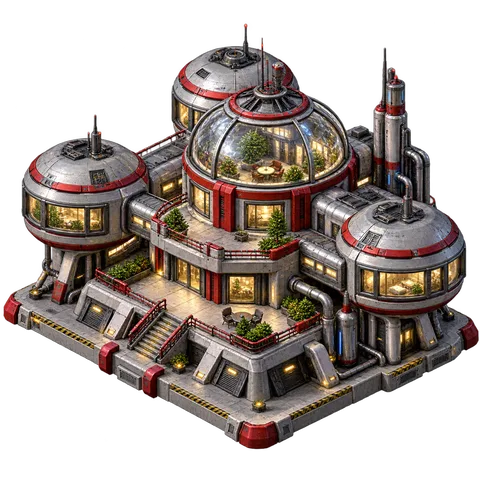 Robotic FutureLife support domeThe machinery that keeps air breathable, removes carbon dioxide and controls temperature: the beating heart of any space home.
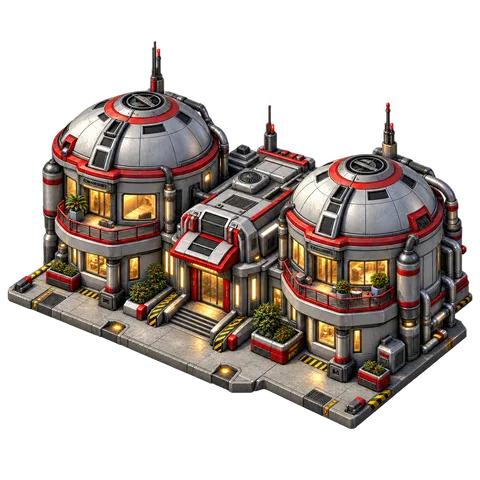 Robotic FutureMoon base homeLinked domes where a crew could live on the Moon, shielded from radiation and connected by pressurized tunnels.
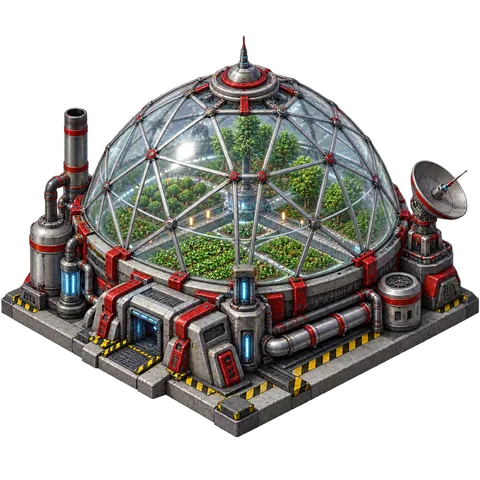 Robotic FutureGreenhouse domeA sealed dome where plants grow food, recycle water and turn carbon dioxide back into oxygen, like a small piece of Earth.
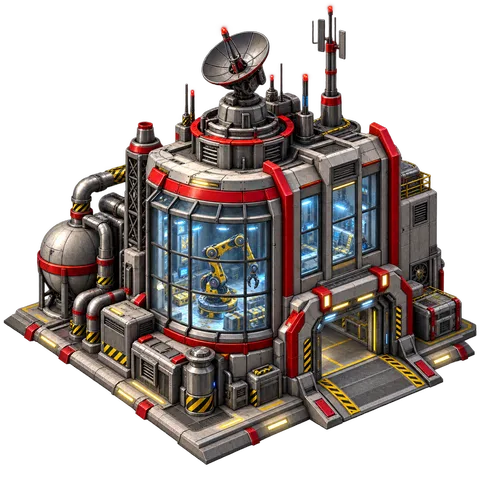 Robotic FutureMedical bayA small hospital where crew members trained in medicine could treat illnesses and injuries with help from doctors on Earth.
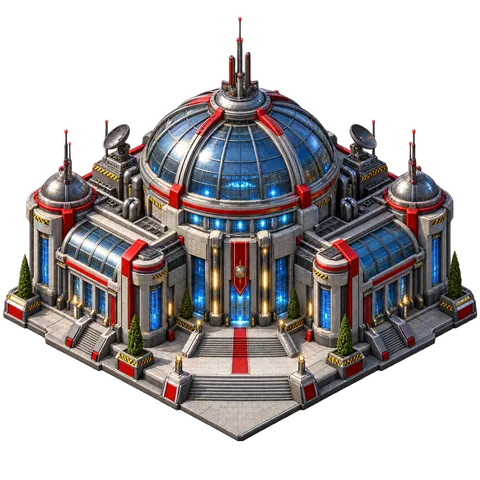 Robotic FutureCivic domeA domed hall where residents decide the rules of their settlement, under international agreements about space.
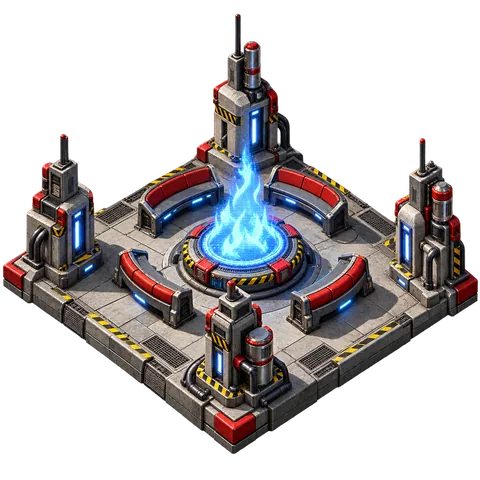 Robotic FutureCommunity plazaA shared square where residents meet, eat and celebrate, because getting along matters as much as any machine.
Sources
The facts in this guide are based on these sources:
- NASA, Mars facts (atmosphere, gravity, temperature and day length)
- NASA Jet Propulsion Laboratory, MOXIE results (2021-2023)
- NASA, "Environmental Control and Life Support System" and 98% water recovery (2023)
- NASA Human Research Program, five hazards of human spaceflight
- Next Generation Science Standards, MS-ETS1 Engineering Design