Imagined What it could do
Imagine a meadow of bright flowers that blooms from spring to autumn, humming with bees, where elves gather honey and seeds without ever harming the insects.
Real world Why pollinators matter
Many plants need animals, mostly insects, to carry pollen from flower to flower so that they can make fruit and seeds. In 2016, a major international assessment by IPBES found that about three quarters of the world's leading kinds of food crops benefit at least partly from animal pollination, including apples, almonds, coffee and chocolate.
Many wild pollinators are declining because of habitat loss, pesticides, disease and climate change.
Bible The lilies of the field
Jesus pointed to wildflowers to show how God cares for what he has made: "Consider how the lilies of the field grow: They do not labor or spin. Yet I tell you that not even Solomon in all his glory was adorned like one of these" (Matthew 6:28–29).
Real world How to help pollinators
- Plant native flowers that bloom at different times of year.
- Leave some areas a little wild, with bare soil and dead stems where bees can nest.
- Avoid pesticides, especially on flowers.
- Provide shallow water with stones to land on.
- Link meadows, gardens and verges so insects can move between them.
Art In this artwork
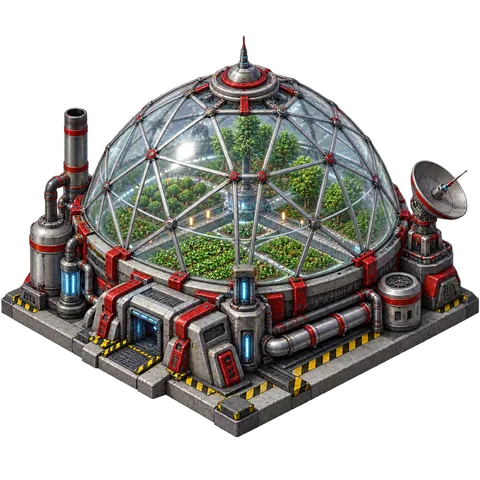
This illustration shows a raised bed of large purple and blue flowers, with small blue glass markers at the corners.
Look closer
- Look at the different flower colors and shapes.
- Where might a bee land?
Think about it
- Why might a city plant flowers for pollinators?
- Could your school or street have a meadow?
- What foods would we lose without pollinators?
Key words
- Pollinator
- An animal that carries pollen between flowers.
- Native plant
- A plant that grows naturally in an area.
- Habitat
- The home of a living thing.
Use it in class
- Sustainable city project ideas for students (Project, grades 5-12)
Sources
The real-world facts on this page are based on these sources:
- IPBES, "Assessment Report on Pollinators, Pollination and Food Production" (2016)
- Xerces Society for Invertebrate Conservation, pollinator habitat guidance
- The Bible, Gospel of Matthew