History Living above the shop
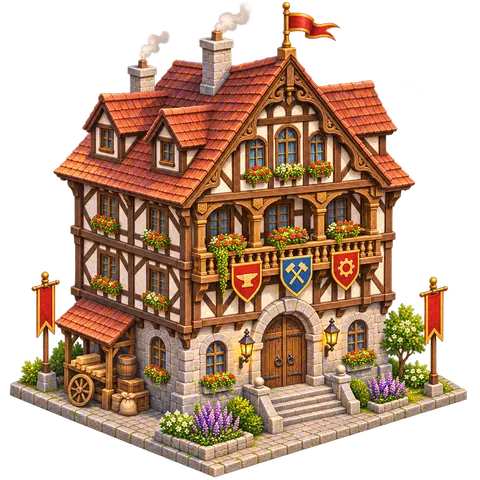
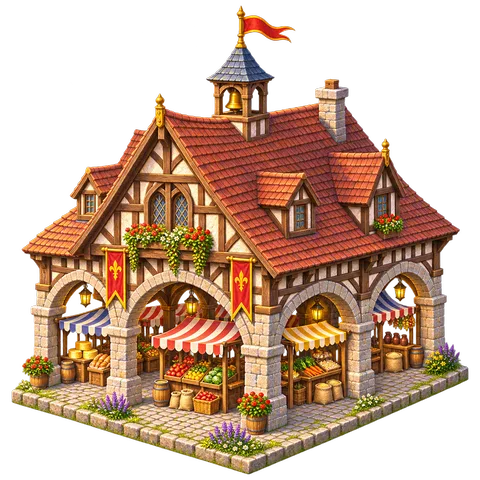
Merchants bought goods in one place and sold them in another: wool, cloth, wine, salt, fish, spices and timber. A successful merchant lived in a solid house in the center of town. The family lived upstairs, the shop faced the street, and goods were kept safe and cool in a cellar or undercroft.
History Trade across Europe
From the 1200s, merchant towns around the North Sea and the Baltic Sea joined in the Hanseatic League to protect their trade. Lübeck in Germany was its leading city. In Bergen, Norway, the old Hanseatic wharf called Bryggen still has rows of wooden merchant buildings, now a World Heritage Site.
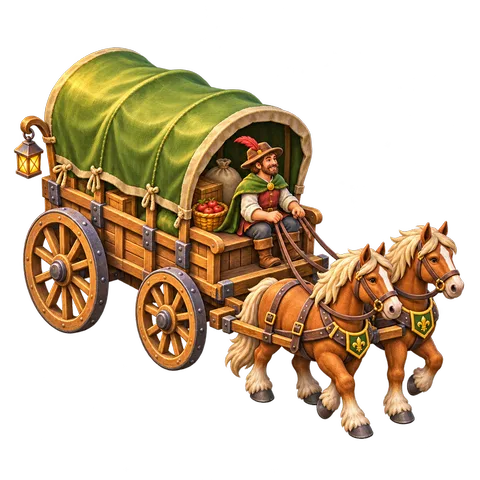
Merchants kept careful accounts. Bills of exchange, early forms of checks, let them pay for goods without carrying chests of coins on dangerous roads.
Art In this artwork
The flower boxes and bench by the door are the artist's cheerful design.
Look closer
- Find the window boxes.
- Where might the goods be stored?
Think about it
- Why might merchants want to live right above their shops?
- Why was carrying lots of coins on the road risky?
- Where do the things in your home come from?
Key words
- Merchant
- A person who buys and sells goods.
- Undercroft
- A cellar under a building, often vaulted.
- League
- A group that joins together for a shared purpose.
Sources
The history on this page is a short summary based on these sources:
- Encyclopaedia Britannica, "Hanseatic League"
- UNESCO World Heritage Centre, "Hanseatic City of Lübeck"
- UNESCO World Heritage Centre, "Bryggen"