

Historical setting
Medieval Kingdom
For about a thousand years, from around AD 500 to 1500, Europe was a land of castles, abbeys, market towns and farming villages. Explore 34 places in a medieval town: what each one was for, how it worked and where you can still see real examples today.
- 34 places
- 4 vehicles
- 6 people
- 62 photos of real places
- Guided tour: A medieval market town
- Picture-book story
Look around the city
Select any building, person or vehicle to open its page. Everything is also listed below.
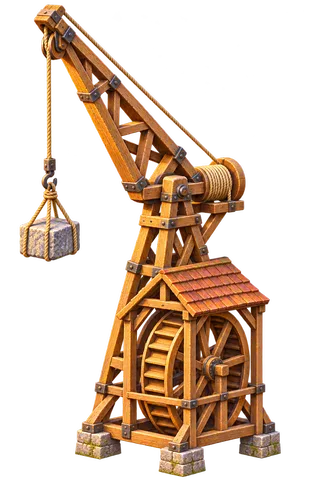 Treadwheel crane
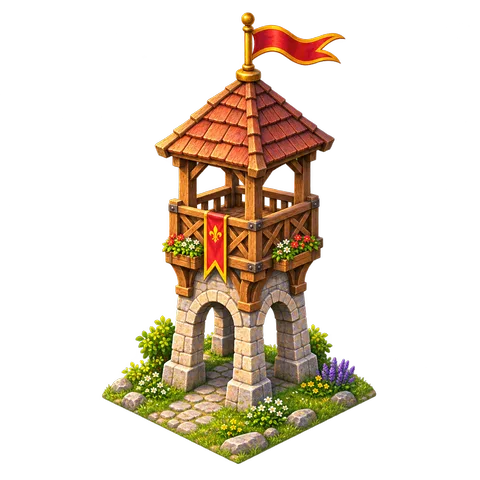 Watchtower
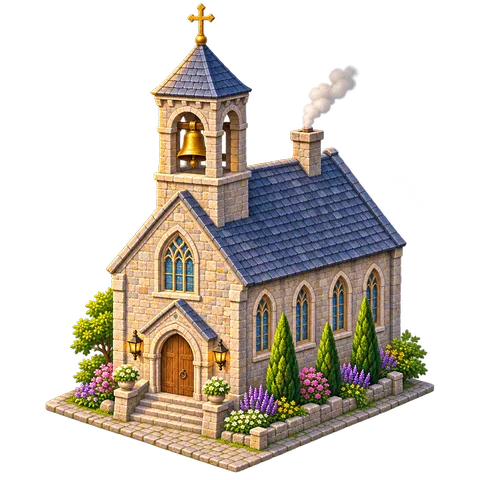 Bell tower
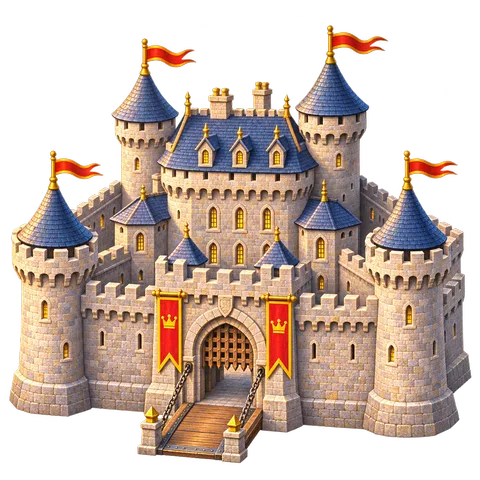 Royal castle
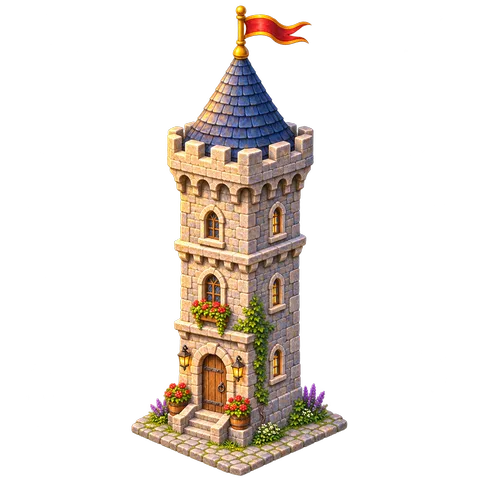 Tower house
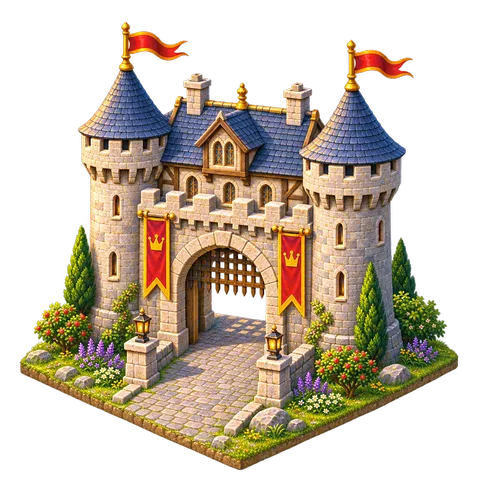 Gatehouse
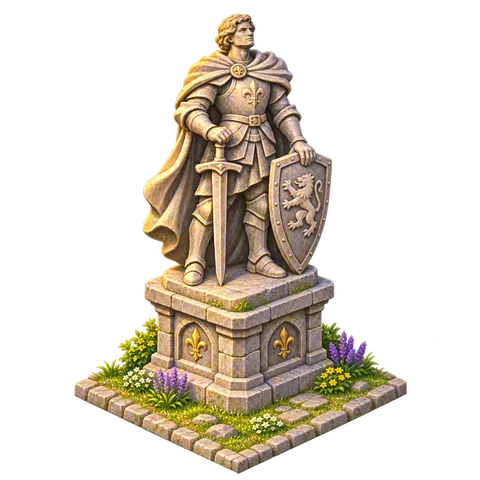 Knight statue
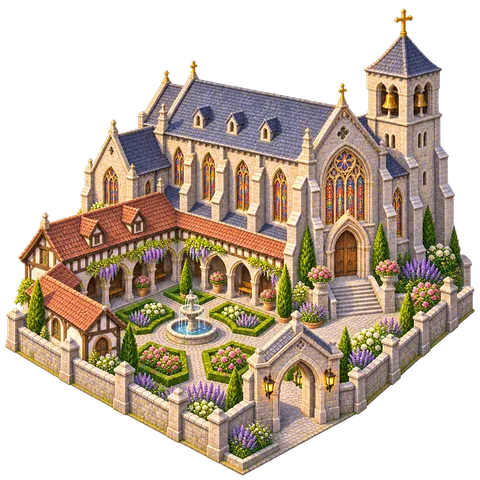 Abbey
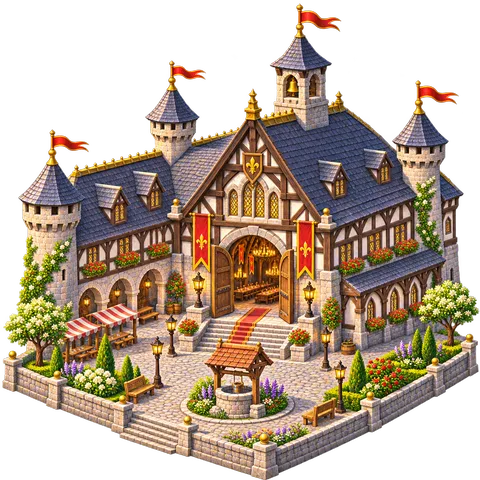 Great hall
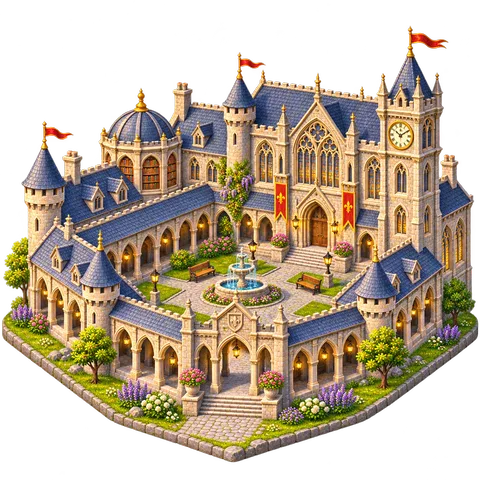 University hall
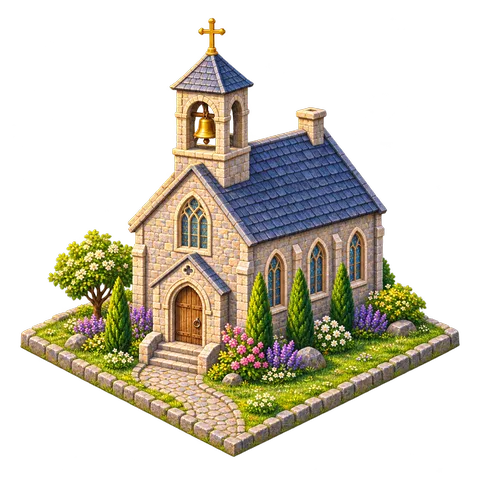 Stone chapel
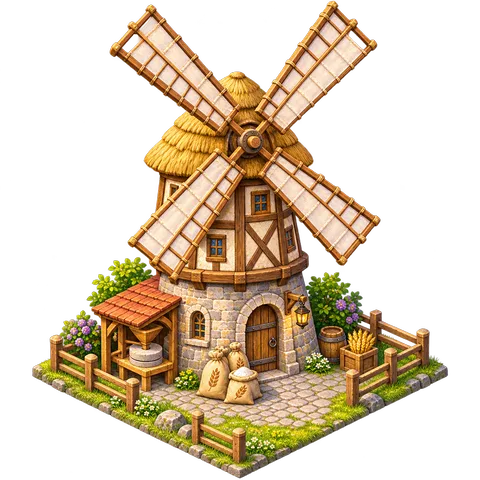 Windmill
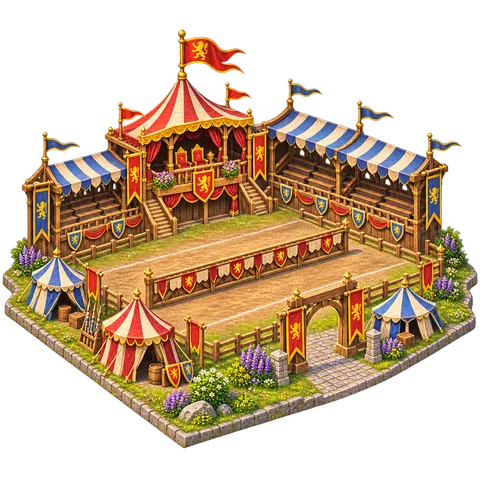 Tournament field
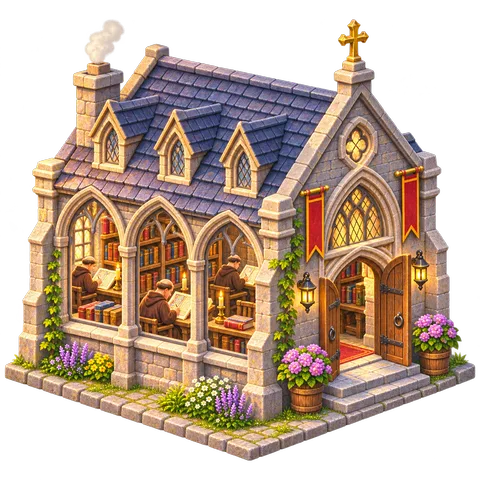 Scriptorium
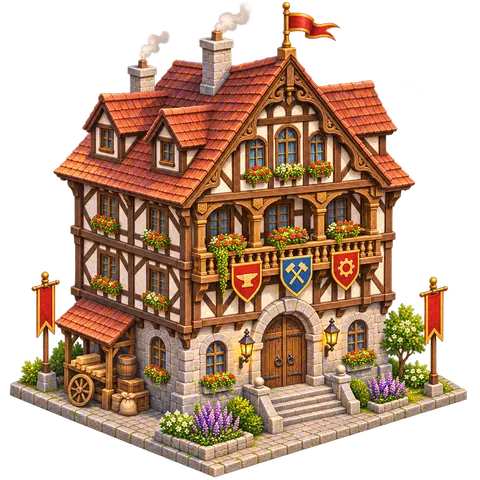 Guild hall
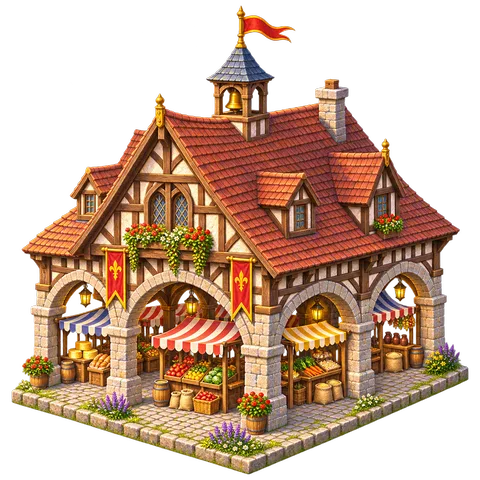 Market hall
 Town house
 Feast hall
 Manor house
 Merchant's house
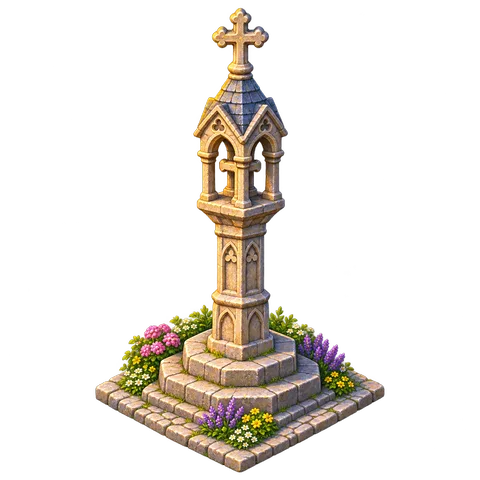 Market cross
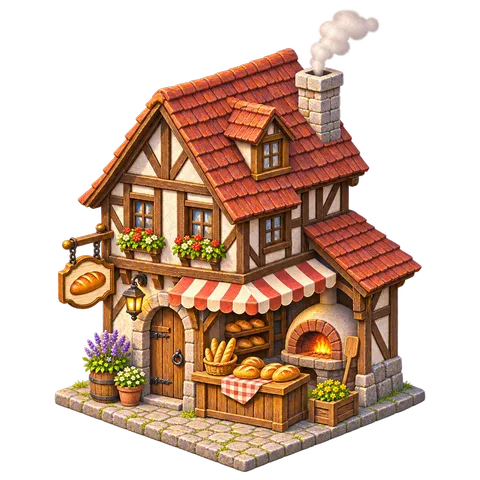 Bakery
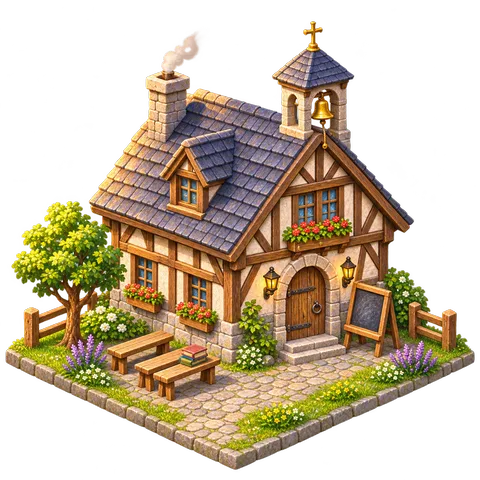 Village school
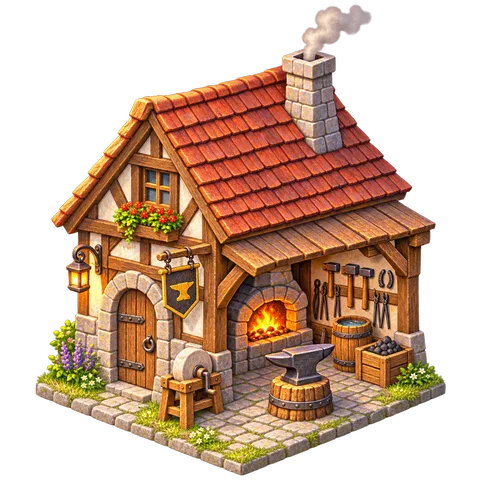 Blacksmith
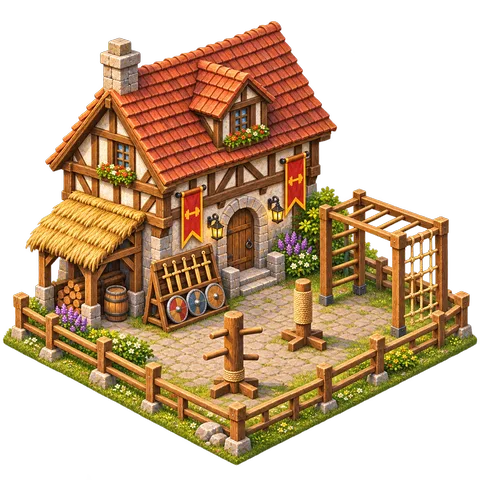 Training yard
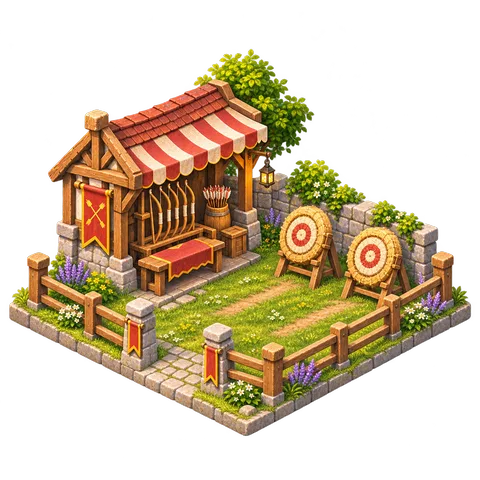 Archery butts
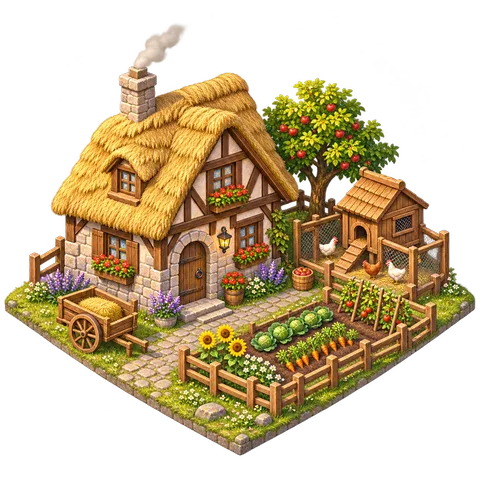 Farmstead
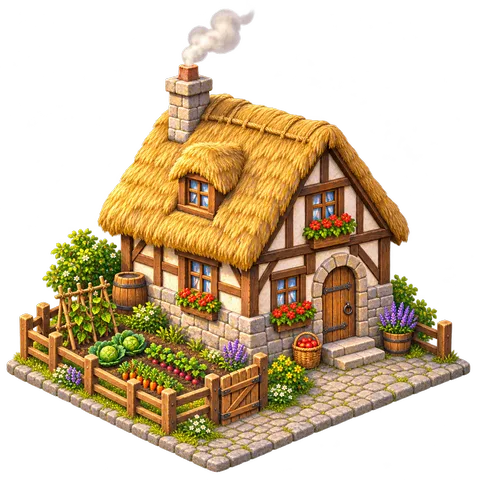 Peasant cottage
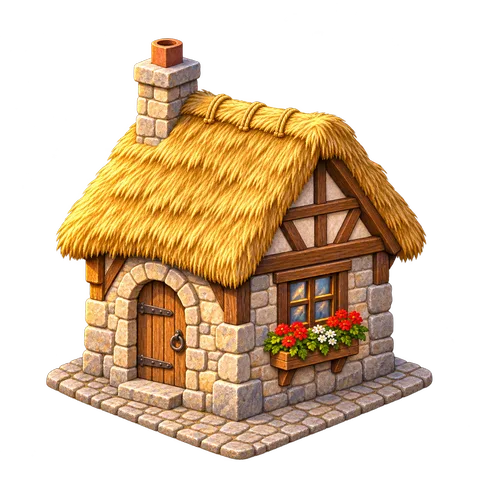 Shepherd's cottage
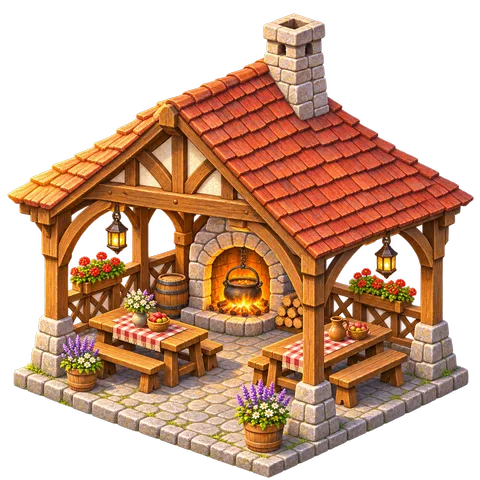 Kitchen and hearth
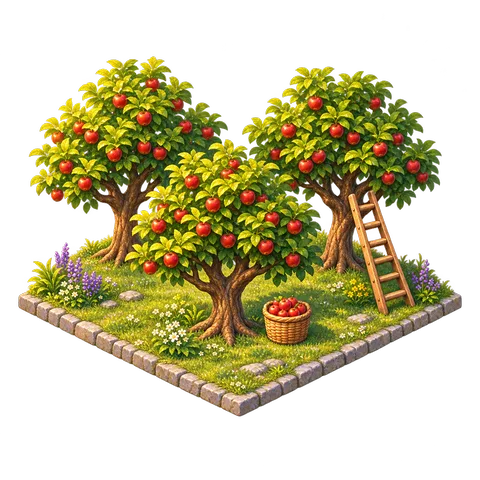 Orchard
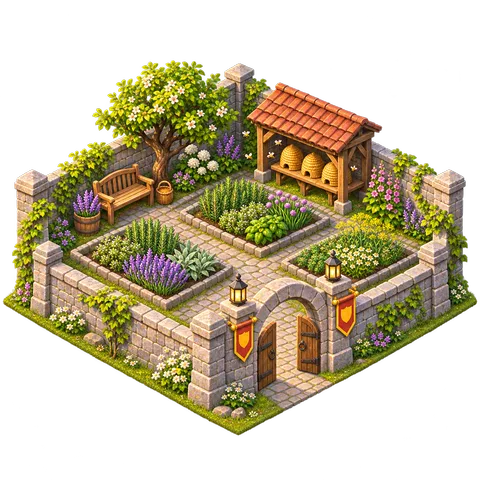 Herb garden
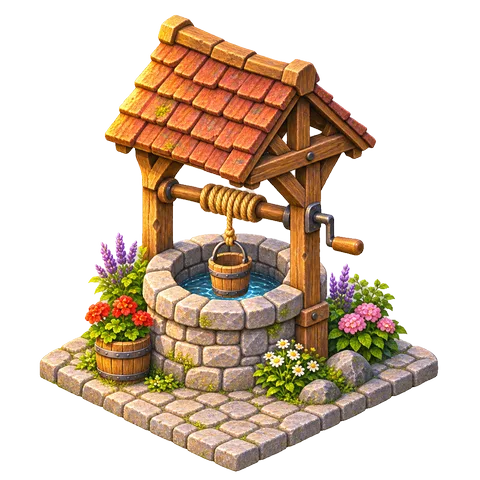 Village well
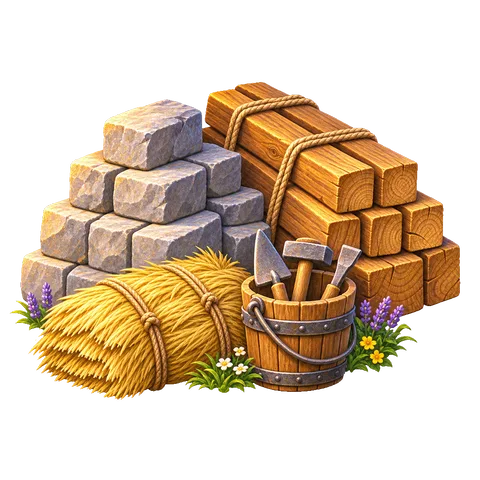 Building materials
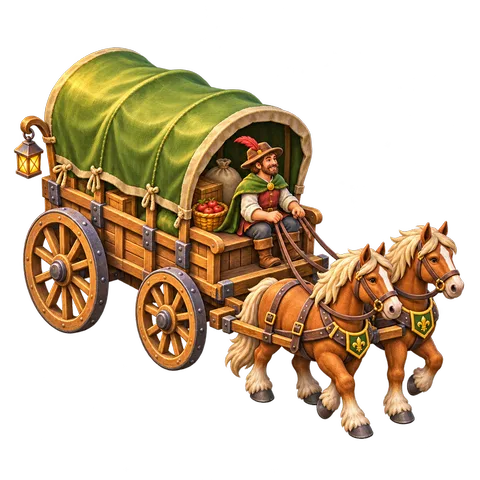 Covered wagon
 Horse and rider
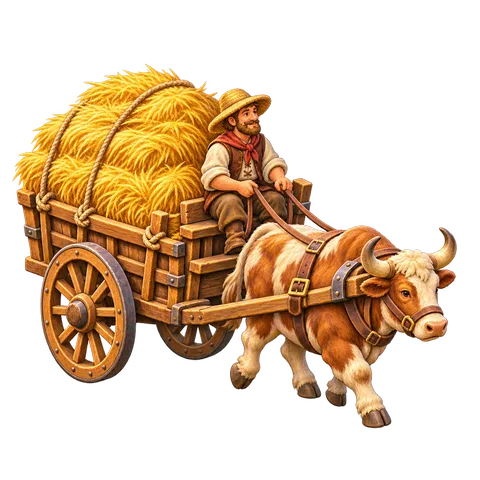 Hay cart
 Donkey cart
 Baker's daughter
 Squire
 Child with a toy horse
 Lady with a prayer book
 Stonemason
 Carpenter
Point at anything on the map to learn what it is.
The buildings are illustrations in a bright storybook style, not exact reconstructions. Each page separates what history tells us from what the artist imagined, and lists its sources.
All 38 places and vehicles
Castle and defense
How a medieval town and its lord kept people safe.
- Royal castleA fortified home for a king or lord: thick stone walls, towers and a gate that could be shut tight.
- GatehouseA fortified gate between two towers, where guards decided who could come in and collected tolls.
- WatchtowerA lookout where watchmen kept an eye on the roads and the town, day and night.
- Great hallThe big room at the heart of a castle or manor, where the household ate, met and held court.
- Knight statueA stone knight with a shield: a reminder of the soldiers on horseback who served kings and lords.
Churches and abbeys
Places of prayer that were also places of learning, care and work.
- AbbeyA community of monks or nuns who lived by a rule of prayer and work, with a great church at its center.
- Stone chapelA small stone church where the village gathered on Sundays and feast days.
- Bell towerA tall tower whose great bell told the town the time, called people together and warned of fire.
Learning and books
Schools, universities and the workshops where books were made by hand.
- Village schoolA small school where boys learned Latin, reading, writing and singing, often taught by a priest.
- ScriptoriumThe room where monks copied books by hand, letter by letter, before printing was invented.
- University hallA college where students from many lands studied law, medicine, the arts and the Bible.
Markets, crafts and guilds
Where goods were made, bought and sold, and how workers organized.
- Market crossA stone cross in the market square that marked where trading happened and reminded people to deal honestly.
- Market hallAn open hall on arches where traders sold their goods, with a meeting room upstairs.
- BakeryA bakehouse with a big oven, where bread, the most important food of all, was baked every day.
- Guild hallThe meeting place of a guild, a group of craftsmen or merchants who set rules for their trade.
- BlacksmithA forge where the smith heated iron until it glowed and hammered it into tools, nails and horseshoes.
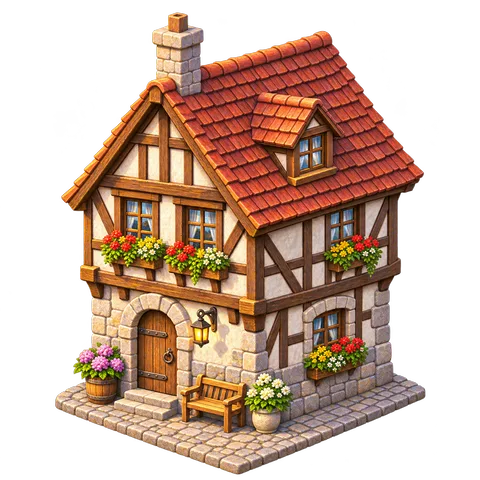
- Merchant's houseA comfortable town house where a trader lived above the shop and stored goods below.
Farms and food
Fields, mills, orchards and gardens that fed the town.
- WindmillA mill whose big sails caught the wind to turn heavy stones and grind grain into flour.
- FarmsteadA family farm with chickens, a cart and strips of land in the big open fields around the village.
- Shepherd's cottageA small stone cottage for a shepherd, who looked after the sheep whose wool made England rich.
- OrchardRows of apple and pear trees that gave fruit to eat fresh, dry for winter or press into cider.
- Herb gardenNeat beds of herbs grown for cooking, medicine and sweet smells, with beehives for honey and wax.
Homes
How people lived, from one-room cottages to manor houses.
- Peasant cottageA thatched home of timber and woven sticks plastered with mud, with a vegetable patch outside.
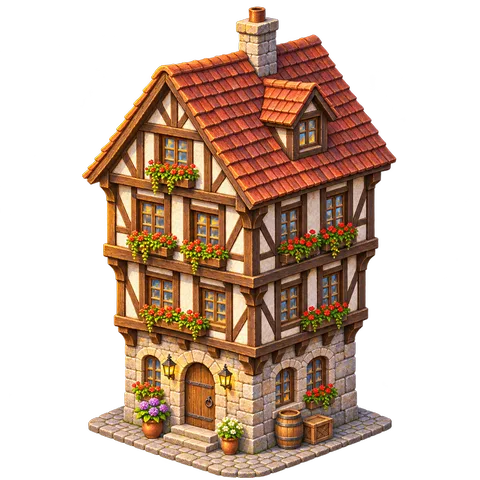
- Town houseA tall timber-framed house with upper floors that jut out over the street.
- Tower houseA tall, narrow stone home built like a small fortress, with a room on each floor.
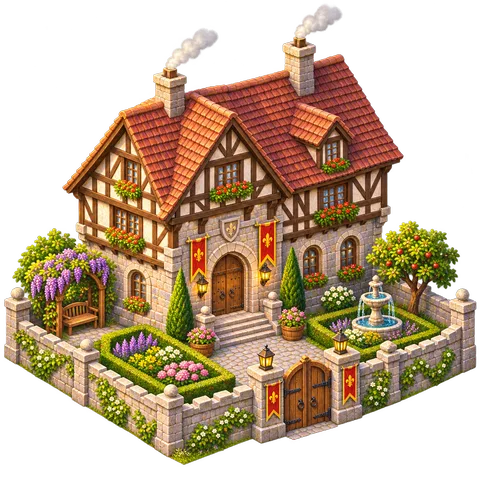
- Manor houseThe home of the lord of the manor, the center of a farming estate and its village.
Halls, kitchens and wells
Where people ate, met, cooked and fetched water.
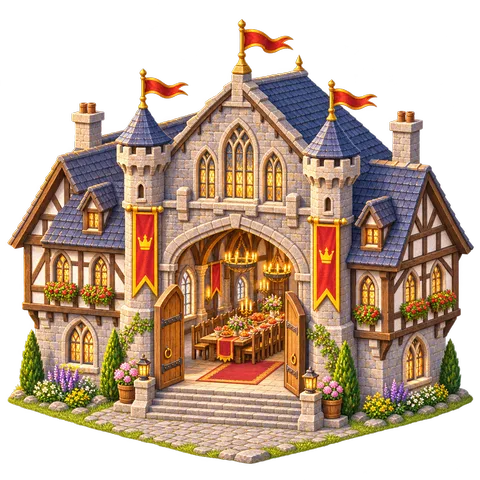
- Feast hallA hall with a long table set for a feast, when a lord or guild celebrated with music and many dishes.
- Kitchen and hearthAn open cooking hearth with a big pot. Big houses often built their kitchens apart, in case of fire.
- Village wellA stone well with a roof, rope and bucket, where people drew water every day.
Tournaments and training
Where knights and townspeople practiced and competed.
- Tournament fieldA field with a fence down the middle where knights jousted, charging at each other with blunted lances.
- Archery buttsA practice ground with straw targets where townsmen trained with the longbow.
- Training yardA fenced yard where squires practiced with wooden swords, shields and a spinning target called a quintain.
Building the town
The machines and materials medieval builders used.
Vehicles and getting around
How people and goods move around the city.
- Covered wagonA four-wheeled wagon with a cloth cover, pulled by horses, that carried goods and travelers between towns.
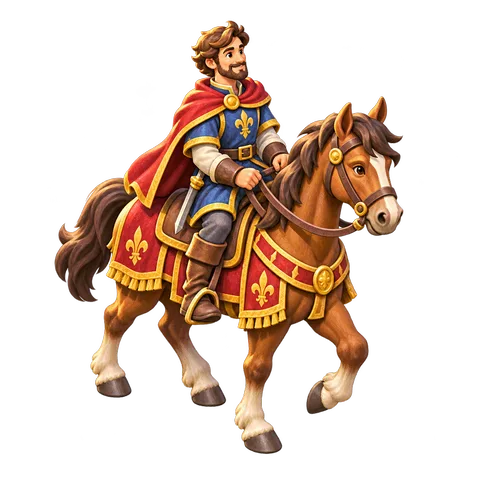 Horse and riderA rider on horseback: the fastest way to travel in medieval Europe, for knights, messengers and nobles.
- Hay cartAn ox cart piled high with hay, cut in summer to feed the animals through the winter.
 Donkey cartA small cart pulled by a donkey, loaded with wooden barrels of ale, wine or salted fish.
Keep exploring
Compare all seven worlds See all Medieval Kingdom artwork
Games with this world: Map hunt · World sort · Shadow match · Picture puzzle