History What a tournament was
Tournaments were contests where knights trained for war and showed off their skill. Early tournaments were rough mock battles, called mêlées, across open country. Later, the favorite event was the joust: two knights on horseback charged at each other with long lances, trying to break the lance on the other's shield or knock him from the saddle.
History Making it safer
Tournaments were dangerous, and knights were hurt and even killed. Over time, organizers used blunted lances with crown-shaped tips and, in the 1400s, added a wooden barrier, called the tilt, down the middle of the lists so the horses could not crash into each other.
History Heralds and coats of arms
In full armor with a closed helmet, every knight looked alike. So knights painted their shields with bright designs called coats of arms. Heralds learned them all, announced the knights and kept score. Heraldry is still used today in flags, badges and logos.
Art In this artwork
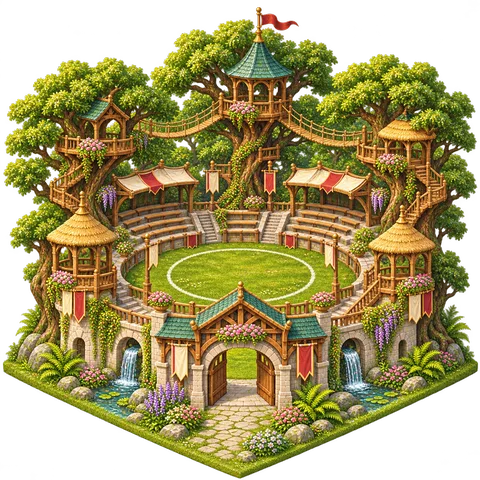
The striped tents, flags, wooden stands and fence are the artist's design, close to pictures of real tournaments.
Look closer
- Find the fence down the middle.
- Where would the people watch?
Think about it
- Why would knights need a way to practice for battle?
- How did rules make the joust safer?
- What symbols show which team you support?
Key words
- Joust
- A contest between two knights on horseback with lances.
- Lists
- The fenced field where a tournament took place.
- Herald
- An officer who announced knights and knew coats of arms.
Sources
The history on this page is a short summary based on these sources:
- Encyclopaedia Britannica, "Tournament" and "Heraldry"
- Encyclopaedia Britannica, "Knight" and "Chivalry"