History Drawing water
Every household needed water for drinking, cooking, washing and animals. Villages dug wells down to the water underground and lined them with stone. A rope and bucket, sometimes wound up on a wooden roller, lifted the water. Fetching it was a daily job, and the well was a place where neighbors met and talked.
People also drank weak ale, which was made by boiling, but water was used every day too.
History Water in pipes
Some abbeys and towns built water systems with lead pipes. A drawing from the 1100s, in a prayer book called the Eadwine Psalter, shows how Canterbury Cathedral brought spring water through pipes to its buildings, with tanks to let the water settle. In London, from 1245, a conduit piped spring water to a fountain house in Cheapside.
Art In this artwork
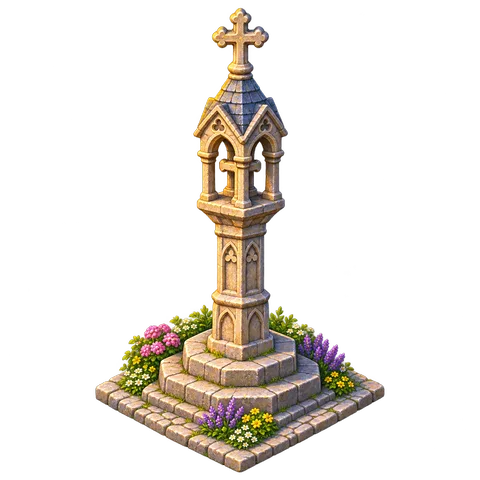
This round well with a little wooden roof is drawn much like real village wells.
Look closer
- Find the bucket.
- What is the roof for?
Think about it
- How much water do you think a family needed each day?
- Why would a town build pipes instead of more wells?
- Where is the nearest place to get water if your taps stopped?
Key words
- Well
- A deep hole dug to reach water underground.
- Conduit
- A pipe or channel that carries water.
- Windlass
- A roller turned by a handle to wind up a rope.
Sources
The history on this page is a short summary based on these sources:
- Trinity College, Cambridge, the Eadwine Psalter (about 1150s to 1160s) and its plan of Canterbury Cathedral's water supply