History What it was
An abbey was a monastery: a community of monks (or of nuns, in a convent) who gave their lives to God. Many followed the Rule of Saint Benedict, written in the 500s, which shaped a day of prayer, work and reading. The monks met in the church several times a day and night to pray and sing the psalms.
At the center stood the abbey church. Beside it was the cloister, a covered walkway around a garden, which linked the dormitory, the dining hall and the chapter house where the monks met.
History More than a church
Abbeys were among the busiest places in medieval Europe. Monks farmed large estates, kept bees, brewed and baked, copied books, taught boys, gave food to the poor and looked after travelers and the sick. Cistercian monks became famous farmers and sheep keepers.
History Places you can still see
Fountains Abbey and Rievaulx Abbey in Yorkshire, England, were founded in 1132 and grew into some of the largest in the country. Their roofless walls stand today because English monasteries were closed in the 1530s under King Henry VIII. The abbey of Mont-Saint-Michel in France rises on a rocky island that the tide surrounds.
Art In this artwork
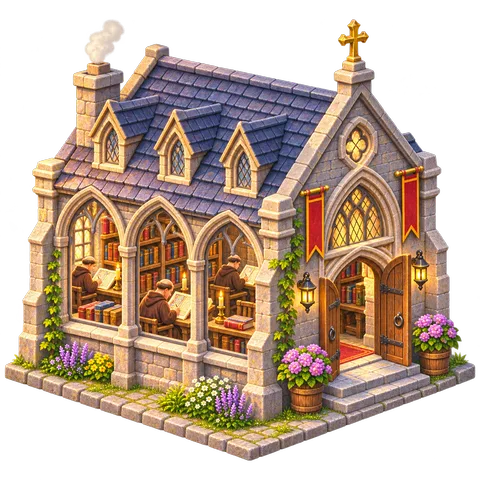
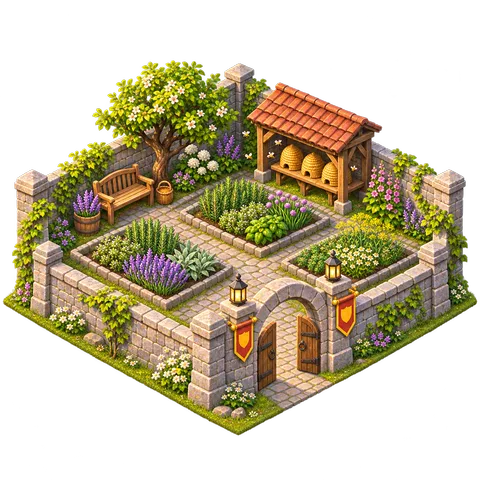
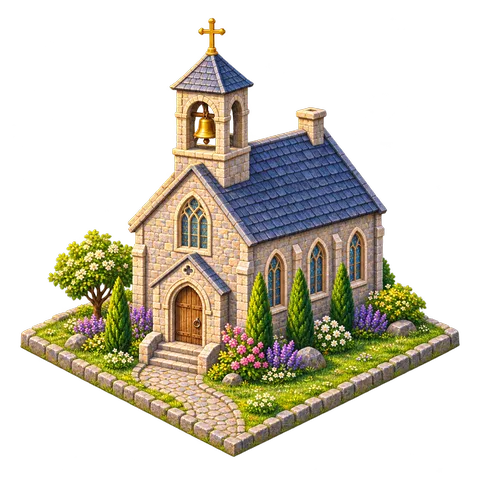
The colored windows, bell tower and cloister garden are drawn in a simplified storybook style.
Look closer
- Find the cross on top of the tower.
- Where is the cloister garden?
Think about it
- Why might a community choose to share its work and its meals?
- Which jobs of an abbey are done by other places in your town today?
- Why do you think so many abbeys were built in quiet valleys?
Key words
- Abbot
- The leader of an abbey of monks (abbess for nuns).
- Cloister
- A covered walkway around a garden in a monastery.
- Monk
- A man who lives in a religious community under vows.
Sources
The history on this page is a short summary based on these sources:
- Encyclopaedia Britannica, "Monasticism", "Benedictine" and "Cistercian"
- The Rule of Saint Benedict (6th century)
- UNESCO World Heritage Centre, "Studley Royal Park including the Ruins of Fountains Abbey"
- English Heritage, "History of Rievaulx Abbey"
- UNESCO World Heritage Centre, "Mont-Saint-Michel and its Bay"