History The heart of the village
Most villages in medieval Europe had a parish church, and it was often the only stone building around. Here people were baptized, married and buried. On Sundays and on the church's feast days, the whole village came to worship together.
The church year shaped the calendar: Christmas, Easter and saints' days were holidays (holy days), when people did not work in the fields.
History How it was paid for
Each household was expected to give a tithe, one tenth of its crops, animals or earnings, to support the church and its priest. Barns built to store this grain were called tithe barns, and some huge ones still stand.
History Places you can still see
St Martin's Church in Canterbury, England, has been used for Christian worship since the 500s and is described as the oldest church in the English-speaking world still in use. Thousands of small medieval parish churches are still used across Europe.
Art In this artwork
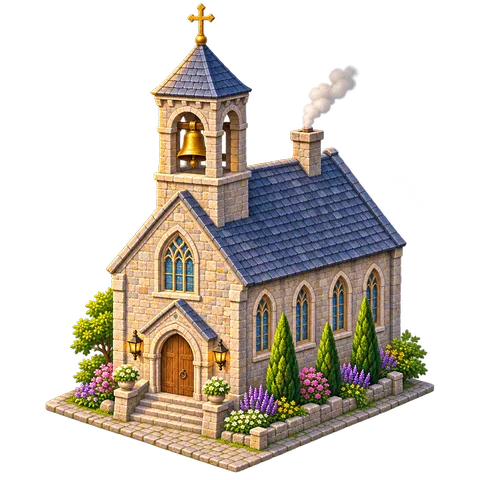
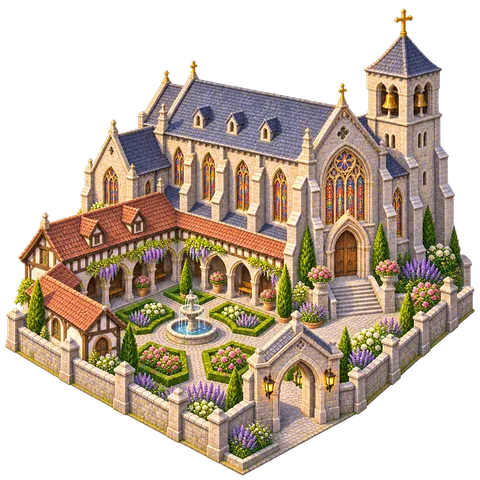
This chapel is drawn small and neat. Many real parish churches grew bigger over the centuries as villages added towers, aisles and windows.
Look closer
- Find the bell cote, the little arch for the bell.
- Look at the shape of the windows.
Think about it
- Why might a village build its strongest building as a church?
- Where does your community gather for big events?
- What does the word "holiday" tell us about where holidays came from?
Key words
- Parish
- The area served by one church and its priest.
- Tithe
- One tenth of produce or earnings given to the church.
- Bell cote
- A small frame for hanging a bell on a roof.
Sources
The history on this page is a short summary based on these sources:
- Encyclopaedia Britannica, "Parish" and "Tithe"
- UNESCO World Heritage Centre, "Canterbury Cathedral, St Augustine's Abbey, and St Martin's Church"