History The voice of the town
Before clocks and phones, bells told everyone what was happening. They rang for church services, for the start and end of the working day, for the curfew at night and for markets. A fast, wild ringing meant danger: fire, flood or attack.
Bells were cast in bronze, a mix of copper and tin, by pouring hot metal into a mold, often right beside the church because big bells were so hard to move.
History Towers of freedom
In the towns of Flanders and northern France, citizens built their own belfries, separate from the church. A belfry showed that a town had won the right to run its own affairs. Its strongroom kept the town's charters and money safe. A group of 56 belfries in Belgium and France is now a World Heritage Site.
The Belfry of Bruges, begun in the 1200s, is about 83 meters tall and has a carillon of 47 bells that plays tunes.
Art In this artwork
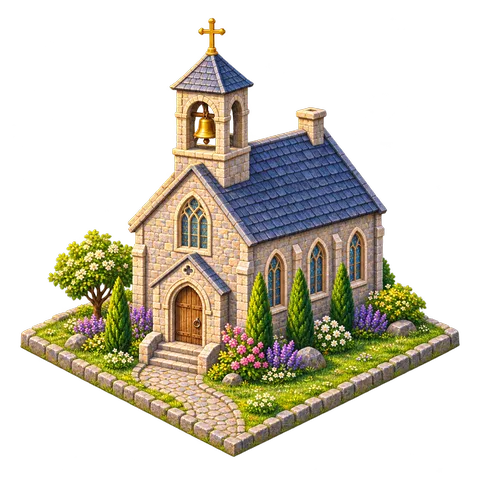
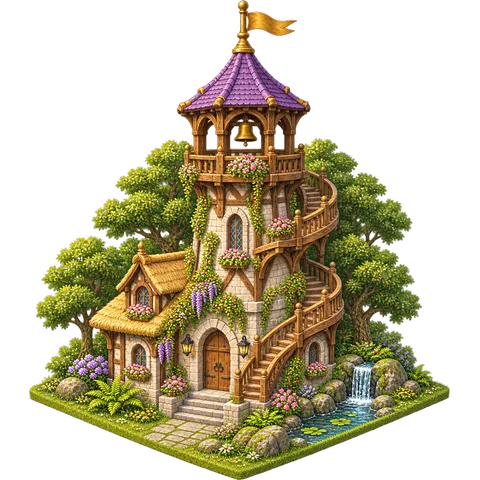
Here the bell hangs in an open belfry on the tower of a small stone church. Town belfries in Flanders were often much taller and stood apart from the church.
Look closer
- Find the bell.
- How would someone climb up to ring it?
Think about it
- What sounds tell you the time or warn you of danger today?
- Why would a town want its own tower, not just the church's?
- How far do you think a big bell could be heard?
Key words
- Belfry
- A bell tower, or the room in it where bells hang.
- Carillon
- A set of bells played from a keyboard.
- Bronze
- A metal made from copper and tin.
Sources
The history on this page is a short summary based on these sources:
- Encyclopaedia Britannica, "Bell" and "Carillon"
- UNESCO World Heritage Centre, "Belfries of Belgium and France"
- Encyclopaedia Britannica, "Curfew"