History What it was
Towns and castles needed to see trouble coming. Towers along the walls gave watchmen a view far down the roads. In Conwy, Wales, the town walls built in the 1280s still run for about 1.3 kilometers with 21 towers.
History The night watch
In the evening a bell rang the curfew. The word comes from the French for "cover the fire": people were expected to cover their hearths for the night, because a fire left burning in a timber town could spread fast. After curfew, watchmen walked the streets and called out if they saw fire or trouble.
Fire was one of the biggest dangers in a medieval town, so watchmen in towers looked out for smoke as much as for enemies.
Art In this artwork
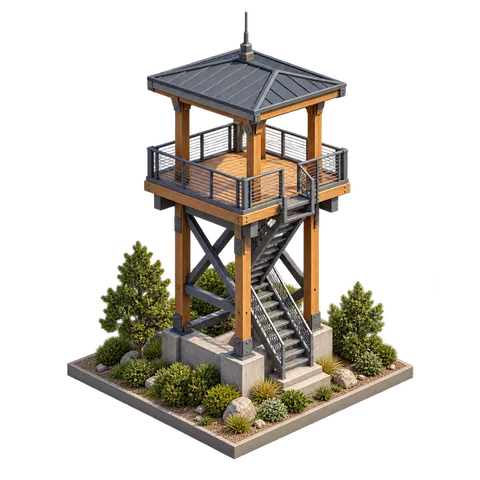
This is a simple timber watchtower on stone legs. Towers on real town walls were usually built of stone.
Look closer
- Find the platform where the watchman stands.
- Which way would you look first?
Think about it
- What dangers do you think a watchman feared most?
- Who keeps watch over your town at night today?
- Why might fire spread so quickly in a medieval town?
Key words
- Curfew
- A time when everyone must be indoors; first, the time to cover the fire.
- Watchman
- A person who guards a place, often at night.
- Lookout
- A high place to watch from.
Use it in class
- How did medieval castles work? (Explainer, grades 3-8)
Sources
The history on this page is a short summary based on these sources:
- UNESCO World Heritage Centre, "Castles and Town Walls of King Edward in Gwynedd"
- Encyclopaedia Britannica, "Curfew"
- Encyclopaedia Britannica, "Castle" and "Motte-and-bailey"