Real world Why early warning matters
A wildfire is easiest to stop when it is small. In dry, windy weather a fire can grow very fast, threatening forests, wildlife, homes and lives. Spotting smoke early lets firefighters reach it before it spreads.
Real world How a lookout works
A lookout is a small cabin with windows on all sides, set on a tower or peak. The watcher scans the horizon through the day. When they see smoke, they use a sighting instrument such as the Osborne Fire Finder, developed in the 1910s by forester William Osborne, to measure its exact direction on a map. If two lookouts take a direction from different places, the fire is where the two lines cross. The lookout then radios the location to firefighters.
Real world Old and new technology
In the United States, fire lookouts were most common from the 1930s to the 1950s. Aircraft and satellites later took over much of the work, but many towers are still staffed in fire season. Today, networks of cameras with smart software also watch for smoke, and communities near forests practice creating defensible space around homes.
Art In this artwork
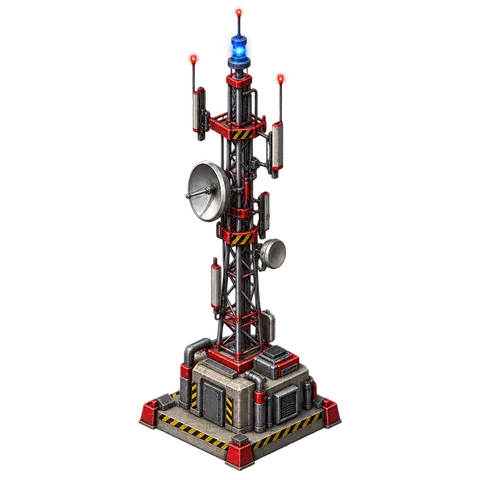
This illustration shows a wooden lookout cabin on a tall frame with stairs.
Look closer
- Find the stairs and the cabin at the top.
- Why are there windows on every side?
Think about it
- Why might a person still be useful when we have satellites and cameras?
- How could you find a fire's location using two lookouts?
- What can people living near forests do to stay safe?
Key words
- Wildfire
- An uncontrolled fire in nature.
- Triangulation
- Finding a location from two or more directions.
- Defensible space
- A cleared area around a home that slows fire.
Sources
The facts on this page are based on these sources:
- US Forest Service and Forest History Society, history of fire lookouts and the Osborne Fire Finder
- National Interagency Fire Center, wildfire information