History Guarding the south
Around 1900 BC, Egyptian kings built a chain of mud-brick forts along the Nile in Nubia, to the south. The fort at Buhen had thick walls with towers, a deep ditch and a drawbridge. Soldiers there sent letters to one another reporting everyone who passed by. Most of these forts now lie under Lake Nasser, the huge lake behind the Aswan High Dam.
History The Medjay
The Medjay were at first Nubian desert scouts who worked for Egypt. Later the name was used for a kind of police, who guarded the desert roads and the royal tombs in the Valley of the Kings.
History Saved from the lake
When the Aswan High Dam was built in the 1960s, its rising lake covered most of the old forts. Archaeologists recorded Buhen before the water came, and its stone temple, built in the time of Queen Hatshepsut, was taken apart and rebuilt in the garden of the National Museum of Sudan in Khartoum.
Art In this artwork
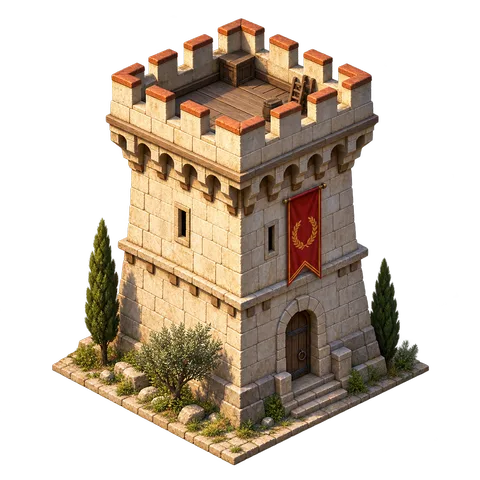
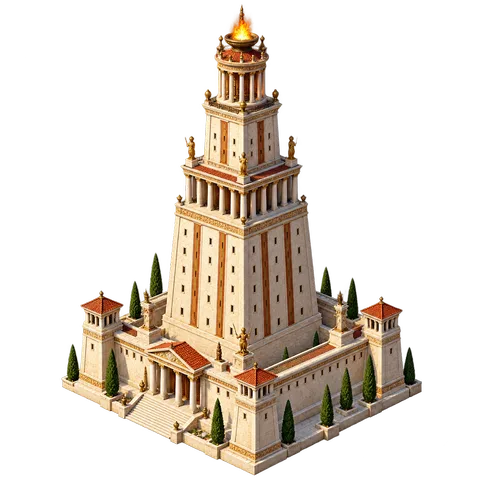
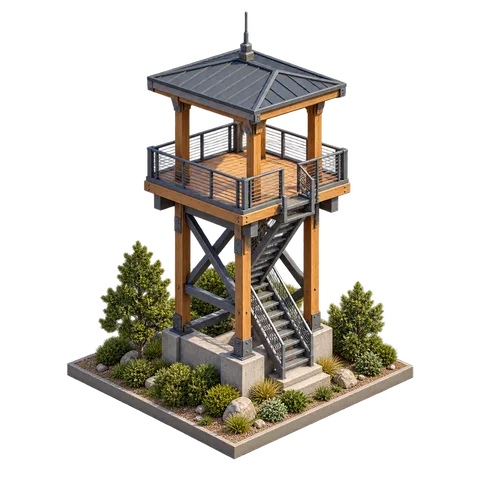
The illustration shows a slim mud-brick lookout tower with a shaded top and a small banner.
Look closer
- Find the shaded lookout at the top.
- Where would the guard climb up?
Think about it
- Why would a country build forts along its borders?
- How could guards send news quickly without phones?
- Who keeps watch over your town?
Key words
- Fort
- A strong building where soldiers live and keep guard.
- Border
- The line where one country ends and another begins.
- Scout
- A person sent ahead to look around.
Sources
The history on this page is a short summary based on these sources:
- Encyclopaedia Britannica, "Nubia"
- UNESCO World Heritage Centre, "Nubian Monuments from Abu Simbel to Philae"
- Encyclopaedia Britannica, "Ancient Egypt"
- Ian Shaw (editor), The Oxford History of Ancient Egypt (2000)