History Lifting water
A shaduf is a long pole balanced on a post, with a bucket on one end and a heavy weight of clay or stone on the other. Pulling the bucket down into the river and letting the weight swing it back up, one person could lift water all day to water gardens and fields. Shadufs appear in Egyptian tomb paintings from about 1500 BC, and some are still used today.
History Moving giant stones
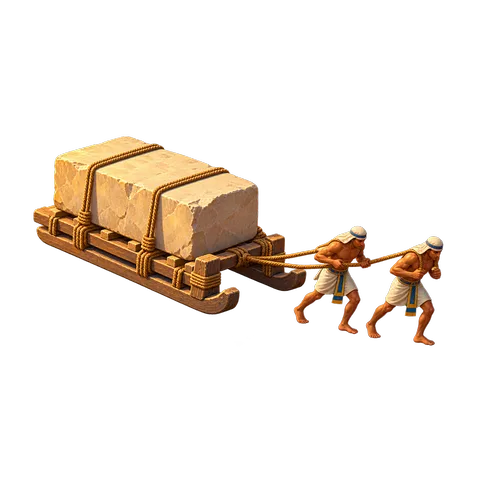
Egyptian builders had no big cranes. They moved heavy blocks on wooden sledges, pulled them up ramps of mud brick and rubble, and used levers to raise them a little at a time. The Greek writer Herodotus said the pyramids were built with lifting machines made of short timbers, but he was writing about 2,000 years later, and builders still argue about exactly how the heaviest stones were raised.
Art In this artwork
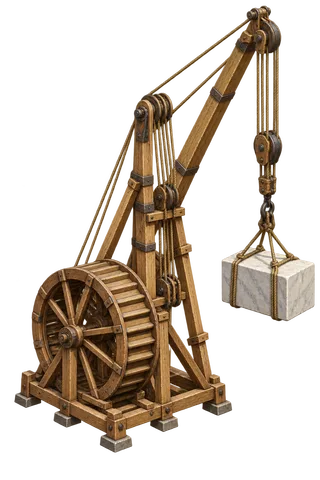
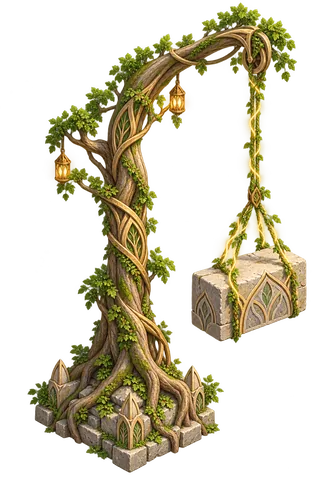
The illustration shows a tall wooden lever on a mud-brick base lifting a sandstone block on a rope, with a clay counterweight at the other end. It mixes the design of a shaduf with a building site.
Look closer
- Find the counterweight.
- Follow the rope down to the stone block.
Think about it
- How does a counterweight make lifting easier?
- Why might builders argue about how the pyramids were built?
- What machines lift heavy things today?
Key words
- Lever
- A bar that turns on a fixed point to help lift a load.
- Counterweight
- A weight that balances a load.
- Ramp
- A sloping surface that joins a lower and a higher level.
Use it in class
- How were the pyramids built? (Explainer, grades 3-8)
- What was daily life like in ancient Egypt? (Explainer, grades 3-8)
Sources
The history on this page is a short summary based on these sources:
- Encyclopaedia Britannica, "Shaduf"
- Dieter Arnold, Building in Egypt: Pharaonic Stone Masonry (1991)
- Herodotus, Histories, Book 2 (about 430 BC)
- Mark Lehner, The Complete Pyramids (1997)