History A medieval feast
On great feast days like Christmas and Easter, lords, abbeys and guilds held feasts. The lord and important guests sat at the high table, and everyone else at long tables down the hall. Musicians played, and servants carried in course after course: roast meats, pies, fish on fasting days, soups, jellies and sweet dishes spiced with ginger, cinnamon and saffron.
People ate with knives, spoons and their fingers; forks were rare. Food was often served on trenchers, thick slices of stale bread that soaked up the juices and could be given to the poor afterward.
History Recipes
Around 1390, the cooks of King Richard II wrote down their recipes in a book called The Forme of Cury ("the method of cooking"). It is one of the oldest cookbooks in English and has recipes for things like blancmange, a dish of rice, almond milk and chicken.
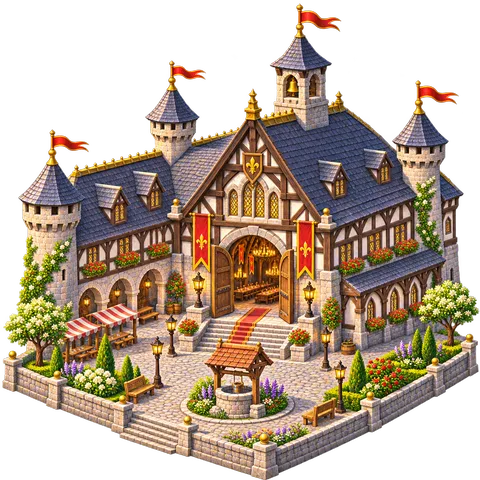
Art In this artwork
The open doors show the long feast table inside. The banners and windows are the artist's design.
Look closer
- Find the long table through the doors.
- Look at the banners.
Think about it
- How was a feast day different from an ordinary day?
- Why do you think trenchers made of bread were useful?
- What special meals does your family share, and when?
Key words
- Trencher
- A thick slice of bread used as a plate.
- High table
- The table for the most important people at a feast.
- Course
- One part of a meal, served at one time.
Sources
The history on this page is a short summary based on these sources:
- The Forme of Cury (about 1390), the recipe book of the cooks of King Richard II
- Encyclopaedia Britannica, "Hall" and "Hammer-beam roof"