History The manor
Much of the countryside was divided into manors. Each manor had a lord, who might be a knight, a noble, a bishop or an abbey. The lord kept some land for himself, called the demesne, and let the rest to villagers in return for rent, crops or work.
The manor house was the lord's home and the center of the estate, with its hall, kitchen, barns, stables and often a chapel and a dovecote.
History A fortified home
Stokesay Castle in Shropshire, England, is one of the best-preserved medieval manor houses. It was built in the 1280s by Laurence of Ludlow, a rich wool merchant, with a great hall and a strong tower, and a moat around it for safety.
Art In this artwork
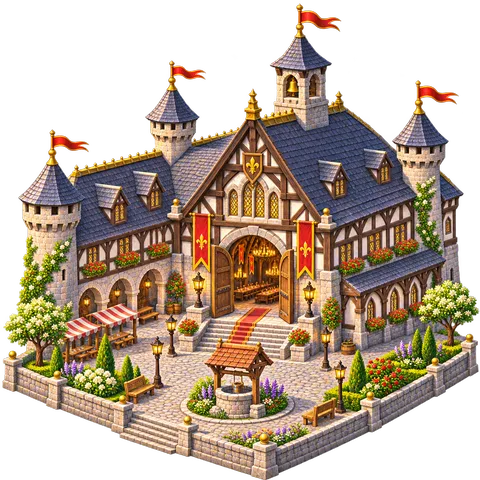
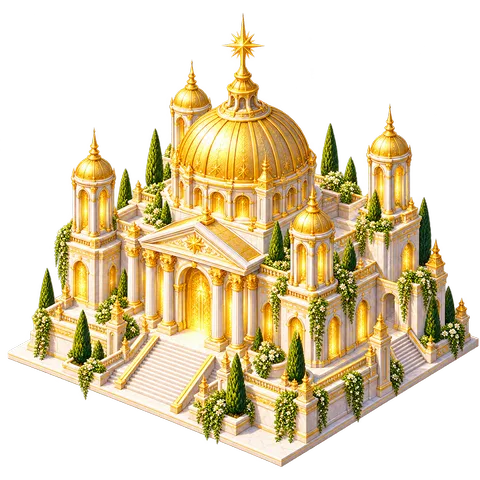
This stone manor with a timber upper floor, walled garden and gate is the artist's design.
Look closer
- Find the chimneys.
- Where is the gate in the garden wall?
Think about it
- What did villagers give the lord, and what did the lord give them?
- Why would a rich merchant want a home that looked like a castle?
- Who looks after the land around your town?
Key words
- Manor
- An estate run by a lord, with a village and land.
- Demesne
- The part of a manor the lord kept for himself.
- Dovecote
- A building for keeping doves and pigeons.
Sources
The history on this page is a short summary based on these sources:
- Encyclopaedia Britannica, "Manorialism" and "Serfdom"
- English Heritage, "History of Stokesay Castle"