History Life on the land
Nine out of ten people in medieval Europe lived in the countryside, and most were farmers. Many were serfs, or villeins, who were tied to the lord's land: they farmed their own strips but also had to work on the lord's fields for part of the week.
History Open fields
Around many villages lay two or three huge open fields without hedges. Each field was divided into long, narrow strips, and each family farmed strips scattered across the fields, so everyone shared good and poor land.
Fields took turns. In the three-field system, one field grew wheat or rye, the second grew peas, beans, oats or barley, and the third rested, so the soil could recover. Plowing the strips year after year left a pattern of ridges you can still see in some English fields today, called ridge and furrow.
A beautiful English prayer book, the Luttrell Psalter, from around 1330, shows farm life in its margins: plowing with oxen, sowing, harvesting and carting.
History The Black Death
From 1347 to 1351, a terrible plague, the Black Death, swept across Europe and killed perhaps a third or more of the people. With so few workers left, the survivors could ask for better pay, and the old ties of serfdom began to break down.
Art In this artwork
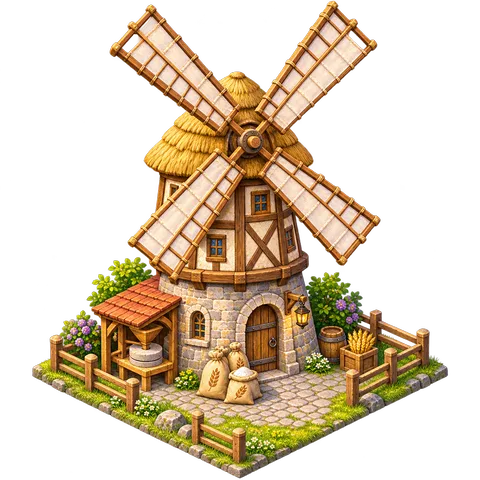
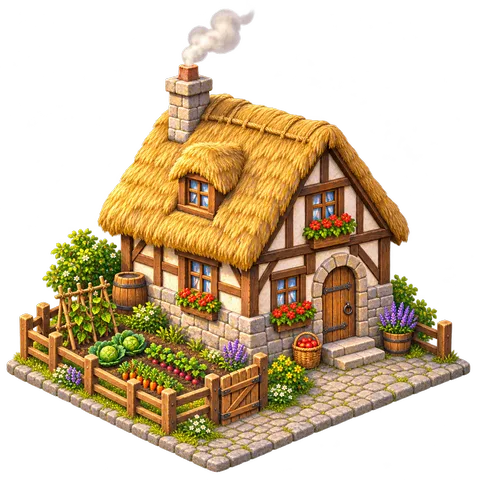
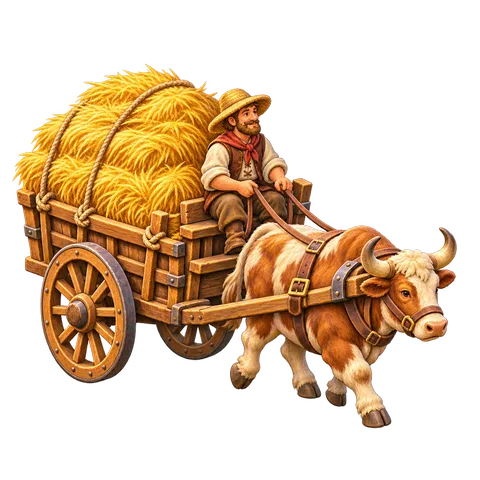
This cozy cottage with a chicken coop and cart stands for a family farm. Real farmhouses usually stood together in the village, with the fields outside.
Look closer
- Find the chicken coop.
- What is the cart for?
Think about it
- Why would families share good and poor land?
- Why let a field rest for a year?
- How did the Black Death change life for workers who survived?
Key words
- Serf
- A farmer tied to a lord's land.
- Fallow
- Plowed land left unplanted for a season to rest.
- Ridge and furrow
- Long ridges left in fields by medieval plowing.
Use it in class
- What was daily life like in the Middle Ages? (Explainer, grades 3-8)
Sources
The history on this page is a short summary based on these sources:
- Encyclopaedia Britannica, "Open-field system" and "Three-field system"
- Encyclopaedia Britannica, "Manorialism" and "Serfdom"
- British Library, "The Luttrell Psalter" (about 1325 to 1340)
- Encyclopaedia Britannica, "Black Death"