
Village and manor
The Middle Ages lasted about a thousand years, from around AD 500 to 1500. For most of that time, nine people in ten lived in the countryside. The land around a village belonged to a lord, and many peasants, called serfs, owed him work on his fields and could not leave without his permission.
Village fields were divided into long strips, and each family farmed strips scattered across them. Crops took turns, and one field rested each year so the soil could recover. The lord often owned the mill and the oven, and villagers paid to use them.
Homes
Country cottages had a timber frame filled with wattle and daub, woven sticks covered in clay, under a roof of thatch. Many had one or two rooms, with a fire on a hearth in the middle of the floor and smoke drifting up through the roof.
In towns, houses were tall and narrow, with upper floors that jutted out over the street. A craftsman often had his workshop or shop on the ground floor and his family upstairs.
Food
Bread was the main food, white for the rich and darker rye or barley bread for everyone else. Most families also ate pottage, a thick stew of grain, peas, beans and vegetables from the garden, and drank ale. Meat was a treat for most people. On Fridays and in Lent, the church asked people not to eat meat, so fish was eaten instead.
Work in town
Towns held a market every week, and some held a big fair once a year. People in the same trade joined a guild, which set prices and standards and decided who could work in the town. A young person learned a trade as an apprentice, often for seven years, then worked for wages as a journeyman, and could become a master with a workshop of their own.
School, church and play
Most children never went to school; they learned at home, in the fields or as apprentices. Some boys went to grammar schools to learn Latin, the language of books and the church. Church bells rang the hours, and Sundays and holy days were days of rest. The word "holiday" comes from "holy day". Children played with balls, spinning tops, dolls and toy horses, and towns enjoyed fairs and plays.
Questions for students
- Why did most people in the Middle Ages live in the countryside?
- Why might a town make rules about the weight and price of bread?
- Compare a medieval child's day with yours. What would you miss, and what might you enjoy?
Questions students and teachers ask
What did people eat in the Middle Ages?
Mostly bread and pottage, a thick stew of grain, peas, beans and vegetables, with ale to drink. Meat was a treat for most families, and fish was eaten on fast days.
Did children go to school in the Middle Ages?
Most did not. Children helped at home and in the fields, or learned a trade as apprentices. Some boys went to grammar schools to learn Latin, often taught by a priest.
What were medieval houses made of?
Most were timber frames filled with wattle and daub, woven sticks covered in clay, with thatched roofs. Castles, churches and rich people's houses were built of stone.
Building pages to use with this guide
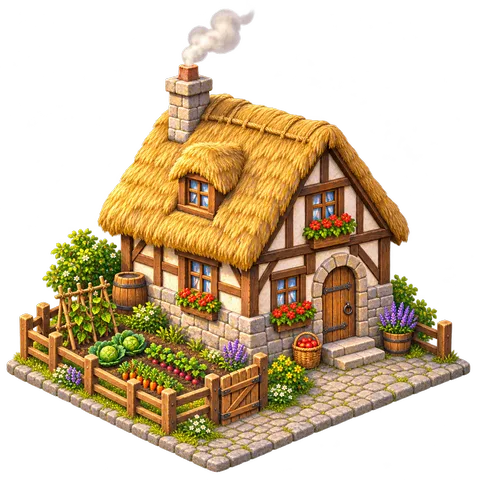 Medieval KingdomPeasant cottageA thatched home of timber and woven sticks plastered with mud, with a vegetable patch outside.
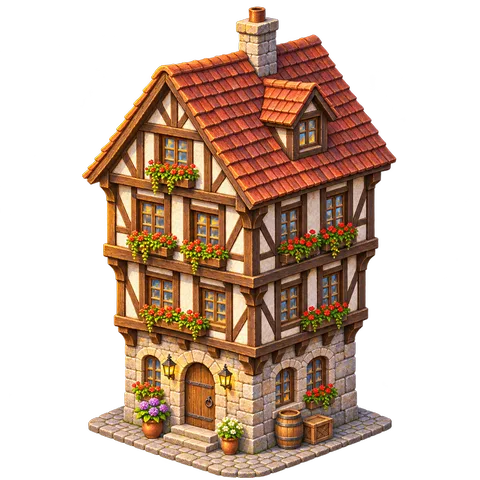 Medieval KingdomTown houseA tall timber-framed house with upper floors that jut out over the street.
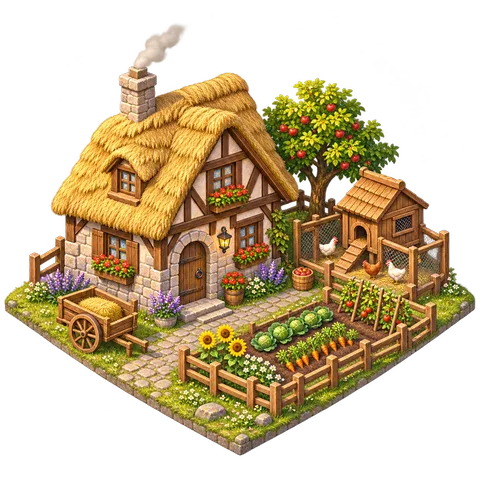 Medieval KingdomFarmsteadA family farm with chickens, a cart and strips of land in the big open fields around the village.
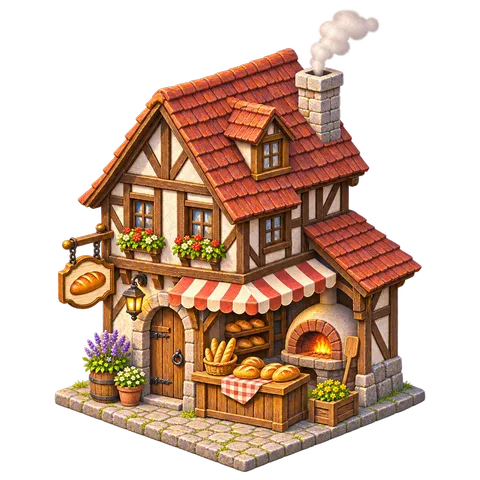 Medieval KingdomBakeryA bakehouse with a big oven, where bread, the most important food of all, was baked every day.
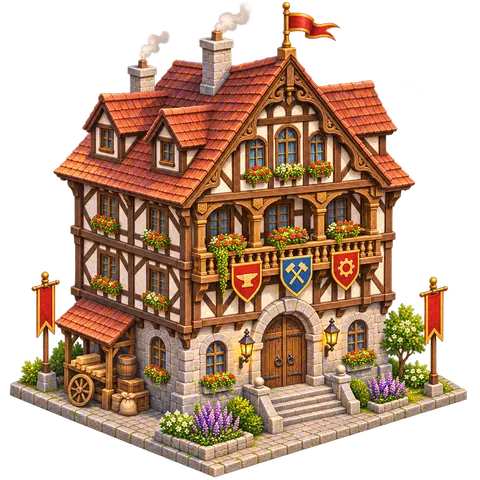 Medieval KingdomGuild hallThe meeting place of a guild, a group of craftsmen or merchants who set rules for their trade.
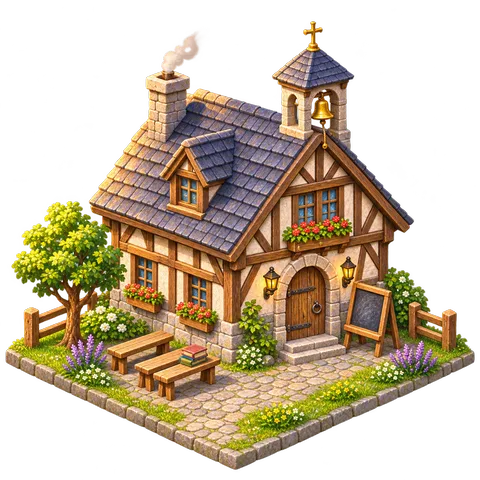 Medieval KingdomVillage schoolA small school where boys learned Latin, reading, writing and singing, often taught by a priest.
Sources
The facts in this guide are based on these sources:
- Encyclopaedia Britannica, "Middle Ages"
- Encyclopaedia Britannica, "Manorialism" and "Serfdom"
- Encyclopaedia Britannica, "Guild" and "Apprenticeship"
- English Heritage, "History of Wharram Percy Deserted Medieval Village"