
You will need
- Paper pennies: 10 for each student.
- Index cards for goods: each guild draws or writes its goods, one card per item.
- A sign for the market cross, and a table or two desks for each guild's stall.
- A few "short weight" cards for the market inspector to hand out.
Steps
- Explore (10 minutes). In pairs, students read the Market hall, Guild hall and Bakery pages and note one rule a medieval town had about trade.
- Form guilds (10 minutes). Groups of four or five choose a trade, such as bakers, weavers, smiths, potters or candle makers, and write three rules: one about quality, one about price, and one about who may join.
- Make goods (10 minutes). Each guild makes its goods cards and sets a fair price for each.
- Through the gate. Every trader pays one penny toll at the town gate to bring goods to market.
- Market day (15 minutes). Students take turns as traders and shoppers. A market inspector checks stalls and hands a "short weight" card to any trader who breaks a guild rule.
- Talk it over (10 minutes). Use the discussion questions below.
What students learn
- Why medieval towns had markets, fairs and gates with tolls.
- How guilds set prices and standards, and trained apprentices.
- Adding and subtracting with money, and what makes a price fair.
- How rules that protect shoppers today grew from old ideas like honest weights.
Questions for discussion
- Why did guilds set prices and check the quality of work?
- Whom did the guild rules help? Could they keep anyone out?
- Why did towns charge a toll at the gate? What did the money pay for?
- What rules protect shoppers today, and who checks them?
Questions students and teachers ask
What grades is this lesson for?
Grades 3 to 7. Younger classes can skip the written rules and just trade; older classes can add a second round in which prices change after a poor harvest.
Does it work for homeschool?
Yes. With a small group, each child runs two trades, and a parent plays the market inspector and the gatekeeper.
Do I need to print anything?
No. Paper pennies and goods cards can be cut from scrap paper, and the building pages can be read on screen.
Building pages to use with this guide
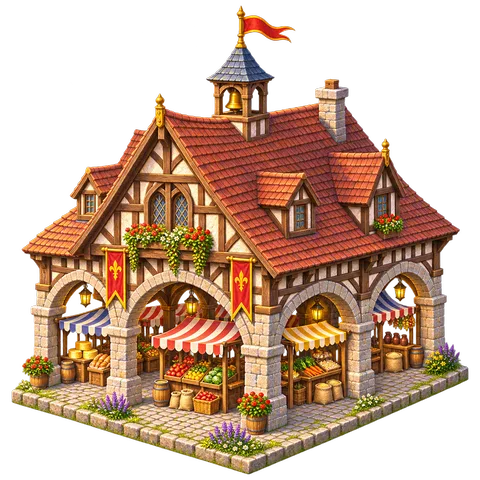 Medieval KingdomMarket hallAn open hall on arches where traders sold their goods, with a meeting room upstairs.
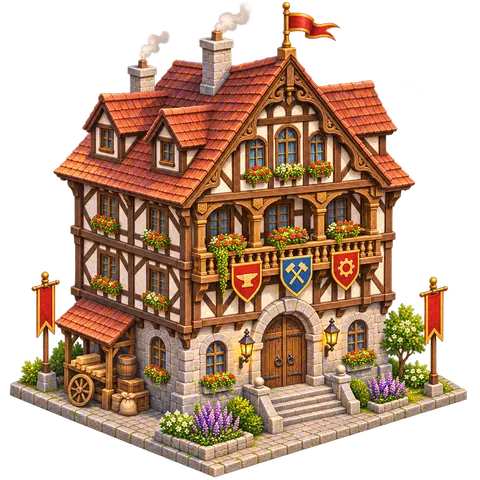 Medieval KingdomGuild hallThe meeting place of a guild, a group of craftsmen or merchants who set rules for their trade.
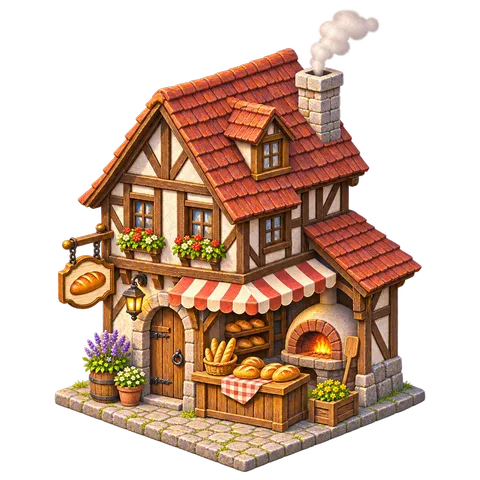 Medieval KingdomBakeryA bakehouse with a big oven, where bread, the most important food of all, was baked every day.
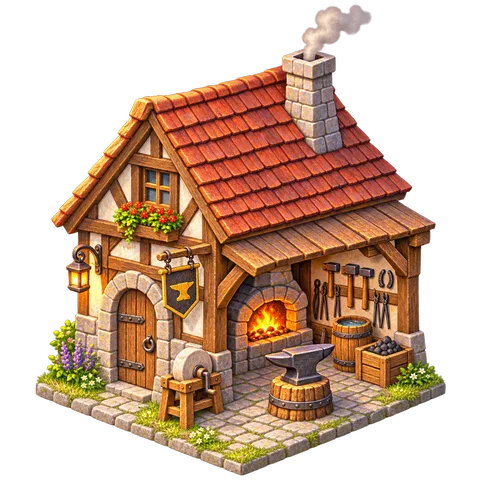 Medieval KingdomBlacksmithA forge where the smith heated iron until it glowed and hammered it into tools, nails and horseshoes.
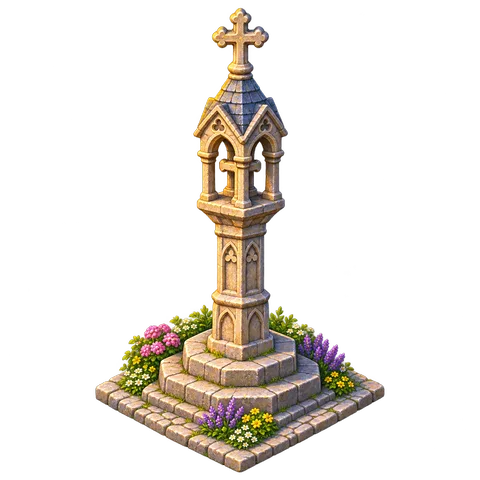 Medieval KingdomMarket crossA stone cross in the market square that marked where trading happened and reminded people to deal honestly.
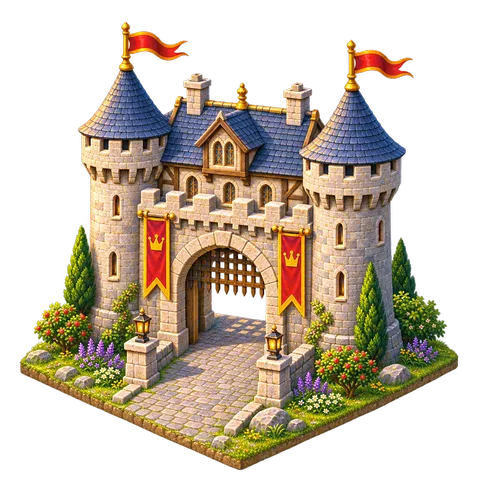 Medieval KingdomGatehouseA fortified gate between two towers, where guards decided who could come in and collected tolls.
Sources
The facts in this guide are based on these sources:
- Encyclopaedia Britannica, "Guild" and "Apprenticeship"
- Encyclopaedia Britannica, "Fair" and "Market"
- The Assize of Bread and Ale (England, about 1266)