History Sheep and wool
Sheep were some of the most useful animals on a medieval farm. They gave wool for clothes, milk for cheese, meat, and manure that made the fields richer. Shepherds watched the flocks on hills and commons, protecting them from wolves and thieves and helping with lambing in spring.
History Wealth from wool
For centuries, English wool was famous across Europe. Merchants shipped it to the busy weaving towns of Flanders and Italy, and taxes on wool helped pay for the king's government.
Since the 1300s, the Lord Speaker in the House of Lords has sat on the Woolsack, a large cushion stuffed with wool, as a reminder of how important wool was to England.
In towns like Lavenham in Suffolk, rich wool and cloth merchants paid for grand churches, sometimes called wool churches.
Art In this artwork
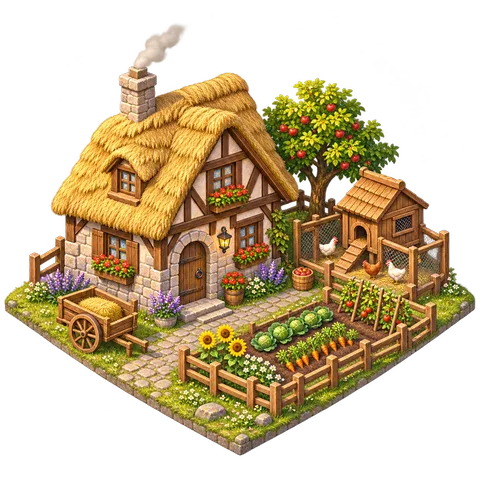
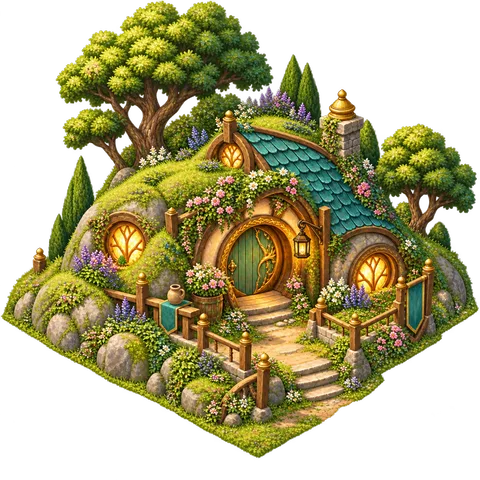
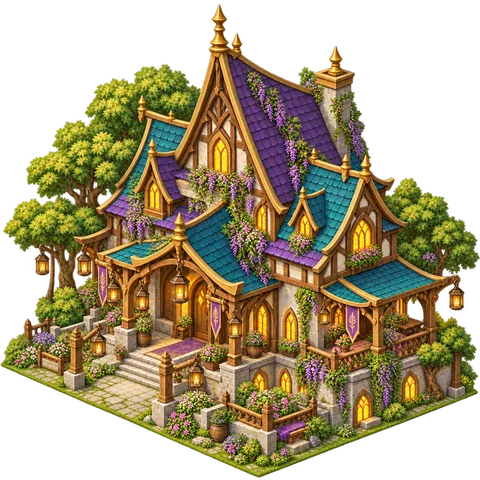
This small stone cottage with a thatched roof is the artist's design. Shepherds on high pastures often lived in simple huts.
Look closer
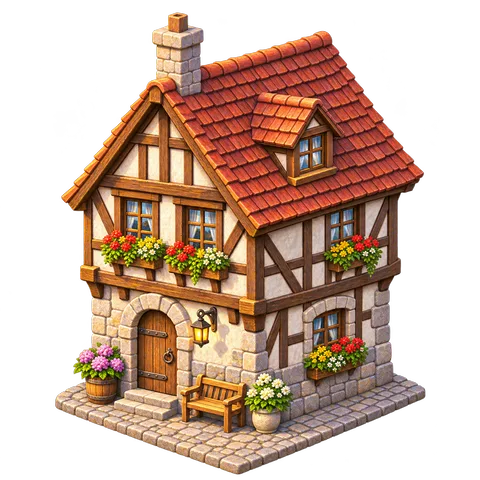
- Find the flower box.
- What is the roof made of?
Think about it
- How many different things did sheep give a village?
- Why might a government care so much about wool?
- What are your clothes made of?
Key words
- Shearing
- Cutting the wool off a sheep.
- Flock
- A group of sheep.
- Woolsack
- The wool-stuffed seat of the Lord Speaker in the House of Lords.
Sources
The history on this page is a short summary based on these sources:
- Encyclopaedia Britannica, "Wool" and "Woolen industry"
- UK Parliament, "The Woolsack"