Real world Why towns have cultural centers
Modern towns are home to people from many backgrounds. A cultural center gives a community a place to keep its traditions alive: teaching a language to children, celebrating festivals, displaying art and telling its history. It also invites neighbors to learn and take part.
In 2022 the International Council of Museums agreed a new definition of a museum, describing it as open to the public, accessible and inclusive, and working with communities.
Real world What happens inside
- Exhibitions of art, crafts and history.
- Classes in music, dance, cooking and languages.
- Performances, film screenings and talks.
- Festivals and celebrations open to everyone.
- Archives that keep photos, letters and stories safe.
Real world Respect and design
A cultural center is designed with the community it serves, often using traditional forms, materials or gardens. Displays should be planned with the people whose culture is shown, so that they tell their own story.
Art In this artwork
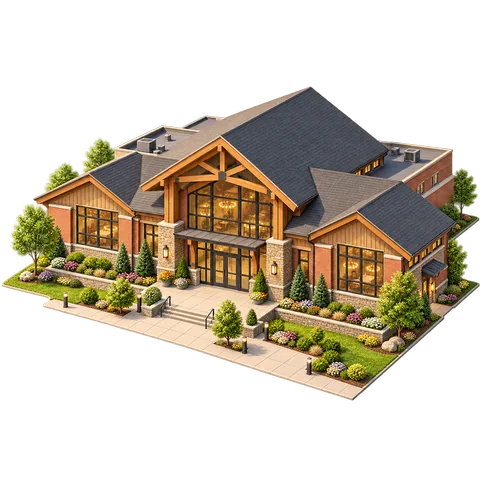
This illustration shows a pavilion with layered roofs in a garden. We use it to represent a cultural center; the building style is the artist's choice.
Look closer
- Notice the layered roofs and the garden around the building.
- Where could a festival or performance take place?
Think about it
- What traditions in your family or community would you share at a cultural center?
- Why does it matter who tells a community's story?
- How can neighbors from different backgrounds get to know each other?
Key words
- Heritage
- Traditions and history passed down through generations.
- Inclusive
- Welcoming to everyone.
- Archive
- A collection of historical records.
Sources
The facts on this page are based on these sources:
- International Council of Museums, museum definition (2022)
- UN-Habitat, "World Cities Report"