
Two common forms
In a mayor-council system, voters elect a mayor who runs the city's day-to-day work and a council that makes laws. In a council-manager system, the elected council hires a professional city manager to run services.
What local government decides
- Budgets and local taxes
- Streets, sidewalks and traffic safety
- Parks, libraries and community centers
- Trash, recycling and often water and sewer service
- Zoning: what can be built where
- Often police, fire and emergency services
Simulation: a council meeting
Choose a real local question, such as "Should a parking lot become a park?" Assign roles: mayor, council members, residents for and against, a city planner and a reporter. Hold a 20-minute meeting with public comment, then a vote. Debrief: who was heard, who was missing, and what evidence changed minds?
How students can take part
Students can attend or watch council meetings, speak during public comment, write to council members, join youth councils, or present a class project, as some middle school classes have done with their city councils.
Questions students and teachers ask
What does a city council do?
A city council passes local laws, approves the budget and makes decisions about local services such as streets, parks, libraries and zoning.
Can students speak at a city council meeting?
In most places, yes. Many councils have a public comment period open to any resident, including young people.
Building pages to use with this guide
 Modern TownTown hallThe home of local government, where elected leaders meet and residents get public services.
 Modern TownCapitol buildingA domed building where elected lawmakers for a state or country meet to debate and pass laws.
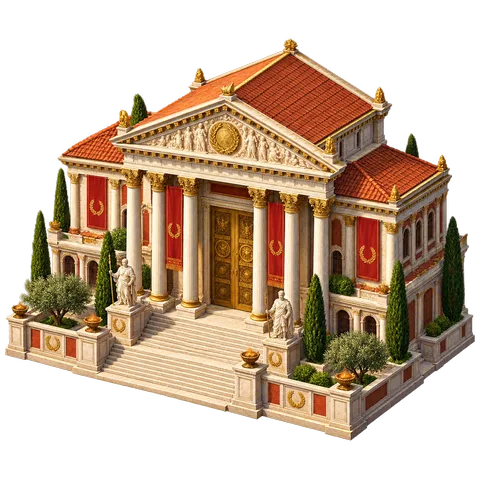 Ancient RomeSenate house (curia)The meeting hall of the Roman Senate, where senators debated laws, wars and the running of the state.
 Green WorldCouncil terraceAn imagined terrace where neighbors decide together how to share the forest. Real research shows communities can manage shared resources well.
 Robotic FutureCivic domeA domed hall where residents decide the rules of their settlement, under international agreements about space.
Sources
The facts in this guide are based on these sources:
- National League of Cities, "Forms of Municipal Government"
- National Council for the Social Studies, "College, Career, and Civic Life (C3) Framework"
- Elinor Ostrom, "Governing the Commons" (1990)