History What it was
The Senate was a council of experienced and mostly wealthy men who advised Rome's leaders. During the Republic it was very powerful, guiding war, foreign affairs and public money. Under the emperors it kept its prestige, though real power moved to the emperor.
The Senate met in a building called the curia. The best-known is the Curia Julia in the Roman Forum. It was begun by Julius Caesar and completed by Augustus, his adopted heir, in 29 BC.
History How it worked
Inside, the hall was tall and plain, with broad, low steps along both long walls where senators sat. At the far end was a platform for the presiding officials. Senators spoke in turn, often in order of rank, and voted by moving to one side of the hall or the other.
In front of the curia was the Comitium, an open meeting place where citizens gathered and where speeches were made to the people.
History What you can see today
The building standing today is a rebuilding ordered by the emperor Diocletian after a fire in the late 3rd century AD. It survived because, in the Middle Ages, it was turned into a church. The original bronze doors were moved to the church of St John Lateran in Rome in the 1600s; the doors on the building now are copies.
Art In this artwork
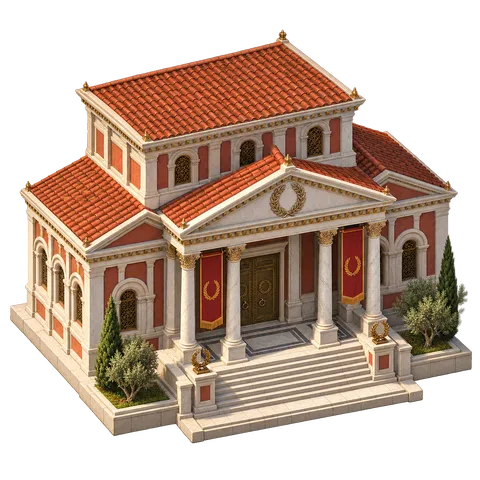
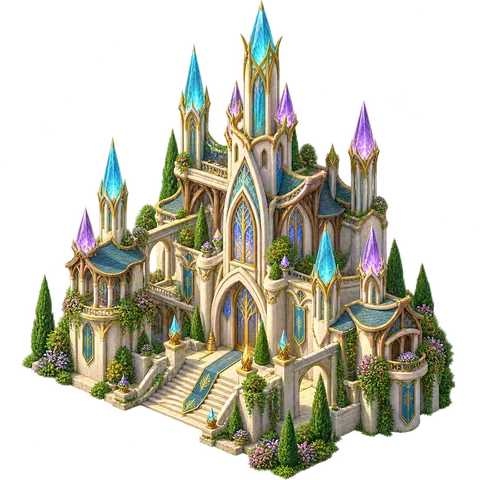
This building's columns, banners and golden doors are the artist's interpretation. The real Curia Julia has a plain brick front.
Look closer
- Find the large doors at the top of the steps.
- Notice the statues and banners. What do they tell visitors?
Think about it
- How does your country or city make its laws? Where do lawmakers meet?
- Why might a meeting hall be designed to look grand?
- Who was left out of the Roman Senate?
Key words
- Senate
- A council of leading citizens (from senex, old man).
- Senator
- A member of the Senate.
- Comitium
- An open meeting space in front of the curia.
Use it in class
- Ancient Rome vs modern cities: compare and contrast (Lesson, grades 6-12)
- How does local government work? (Lesson, grades 5-12)
Sources
The history on this page is a short summary based on these sources:
- Encyclopaedia Britannica, "Roman Forum"
- Smarthistory, "The Roman Forum (Forum Romanum)"
- UNESCO World Heritage Centre, "Historic Center of Rome"