History What it was
The forum was the heart of every Roman town. It was a large open square, usually paved, surrounded by the most important public buildings. People came here to shop, hear speeches, attend trials, take part in religious festivals, vote and catch up on news.
In Rome, the Roman Forum grew up in a low valley between the Palatine and Capitoline hills. The area was once marshy, and it was drained by a great sewer, the Cloaca Maxima, before it could be built on.
History What you would find there
- Temples to gods such as Saturn, Castor and Pollux, and Vesta.
- Basilicas: large halls for law courts and business.
- The Curia, where the Senate met.
- The Rostra, a raised platform for public speeches, decorated with the bronze prows of captured warships.
- Statues and monuments honoring famous people.
- The Sacred Way (Via Sacra), the main street through the forum, used for processions.
History A growing city
As Rome grew, the old forum became too crowded. Julius Caesar, Augustus and later emperors built new forums nearby, known as the Imperial Fora. The largest was the Forum of Trajan, built in the early 2nd century AD.
Smaller Roman towns copied the pattern. In Pompeii, the forum is a long open square with a temple at one end and civic buildings along the sides.
Art In this artwork
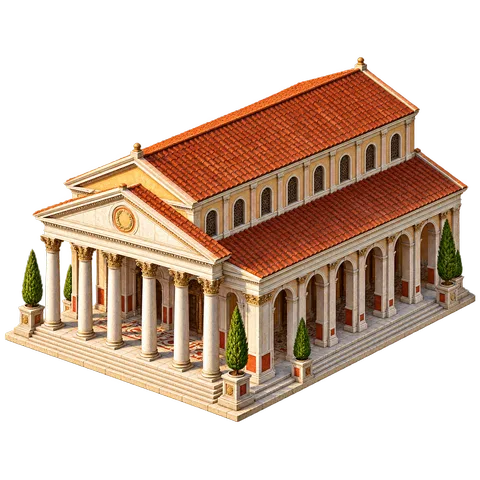
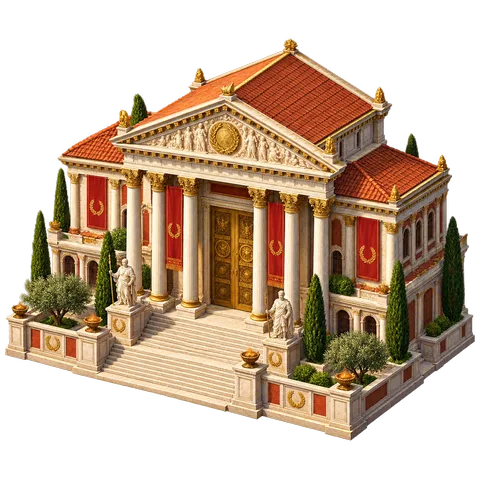
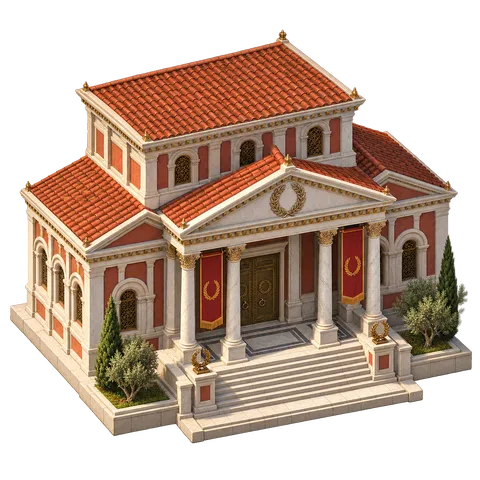
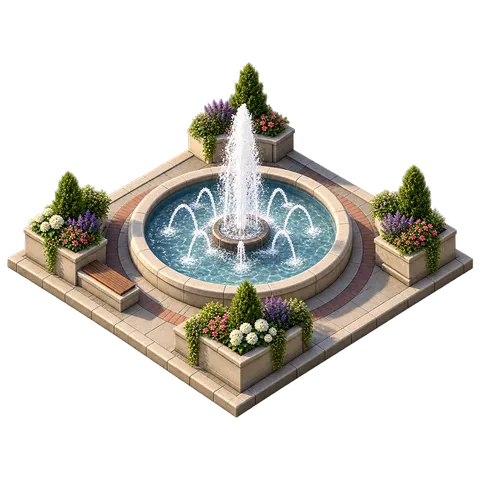
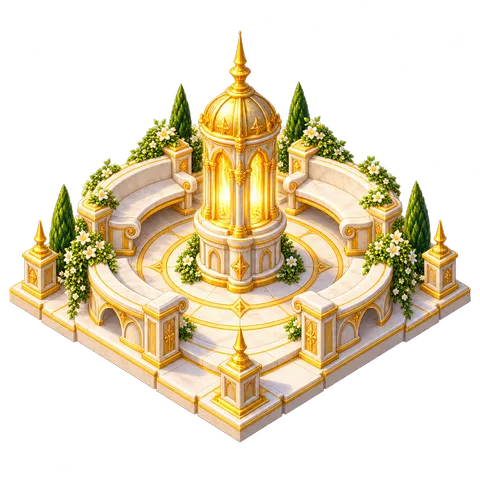
This illustration shows a forum as a courtyard surrounded by buildings, with a temple at the back. Real forums were usually larger, fully paved open squares.
Look closer
- Find the temple at the back of the square.
- Look for colonnades where people could walk in the shade.
Think about it
- Where is the "heart" of your town or city? What happens there?
- Why might it help to put courts, temples and shops in one place?
- Where do people today go to hear speeches or share news?
Key words
- Forum
- A town's main public square.
- Rostra
- The speakers' platform in the Roman Forum.
- Colonnade
- A row of columns, often with a roof.
Use it in class
- Design a city: a project-based unit for grades 5 to 9 (Project, grades 5-9)
- What does a city need to work? (Explainer, grades 3-9)
- What makes a good place to live? Discussion questions (Lesson, grades 5-12)
Sources
The history on this page is a short summary based on these sources:
- Encyclopaedia Britannica, "Roman Forum"
- Smarthistory, "The Roman Forum (Forum Romanum)"
- UNESCO World Heritage Centre, "Historic Center of Rome"
- UNESCO World Heritage Centre, "Archaeological Areas of Pompei, Herculaneum and Torre Annunziata"