History What it was
A basilica was a large roofed hall built beside a forum. It gave Romans a dry, shaded place to do business, settle legal cases and meet in any weather. It was not a religious building in Roman times.
History How it worked
A typical basilica was a long rectangle divided by rows of columns into a wide central space (the nave) and narrower side aisles. The central roof was often higher than the side roofs, so windows near the top could let light in.
At one or both ends there was often a raised platform where magistrates sat to hear cases. Over time this platform was set inside a curved, half-domed space called an apse. Busy trials drew crowds of onlookers, and lawyers gave dramatic speeches.
History Places you can still see
In the Roman Forum you can see the floor and column bases of the Basilica Julia and the Basilica Aemilia. Nearby, three enormous vaults survive from the Basilica of Maxentius, finished under Constantine in the early 4th century AD. The Basilica Ulpia stood in the Forum of Trajan, with apses at each end that served as courtrooms.
History A lasting design
When Christians began building large churches in the 4th century, they used the basilica plan: a long nave, side aisles and an apse at one end. Many churches today still follow this shape and are still called basilicas.
Art In this artwork
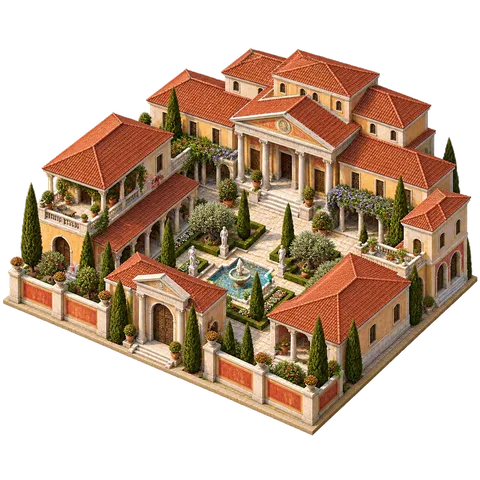
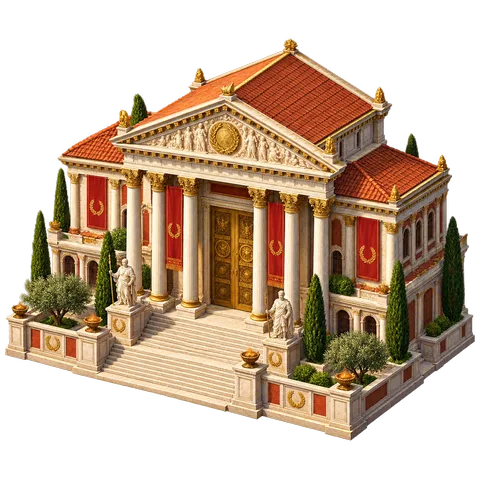
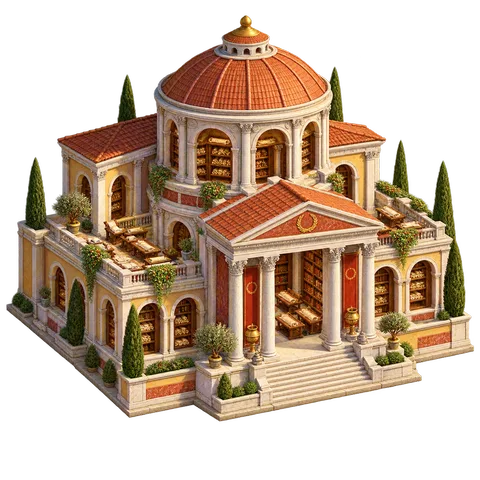
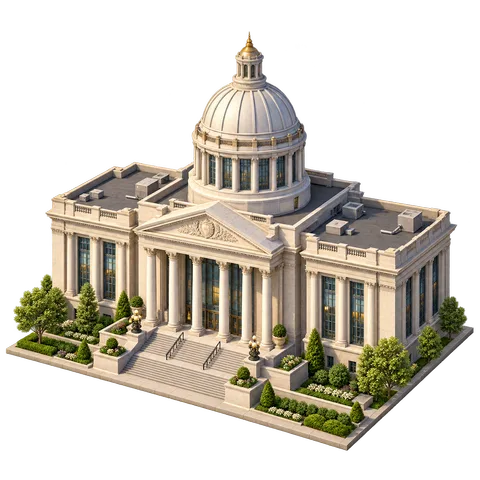
This is a general illustration of a basilica, not a specific building.
Look closer
- Notice the long rows of columns. What do they hold up?
- Find the windows that would let light into the hall.
Think about it
- Why might a city want courts and business in one central building?
- Which buildings near you are used for many different purposes?
- Why do you think churches borrowed this design?
Key words
- Nave
- The wide central space of a hall.
- Aisle
- A side passage separated by columns.
- Apse
- A curved, half-domed space at the end of a building.
Sources
The history on this page is a short summary based on these sources:
- Encyclopaedia Britannica, "Basilica" and "Basilica Ulpia"
- Encyclopaedia Britannica, "Roman Forum"
- Smarthistory, "The Roman Forum (Forum Romanum)"