
Ancient Egypt · Guided tour
Life on the Nile
The river, food, writing and great monuments.
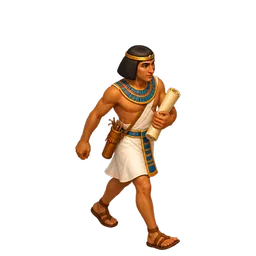
Stop 1
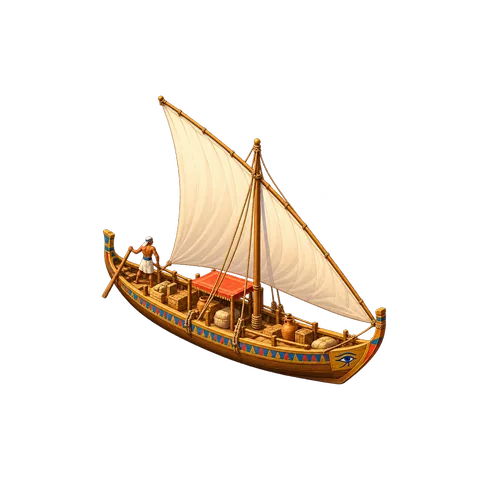
Nile sailing boat
The Nile is our highway. Boats sail south with the wind and float north with the current, carrying grain, stone and people.
Why might a river be easier to travel on than a road?
Stop 2
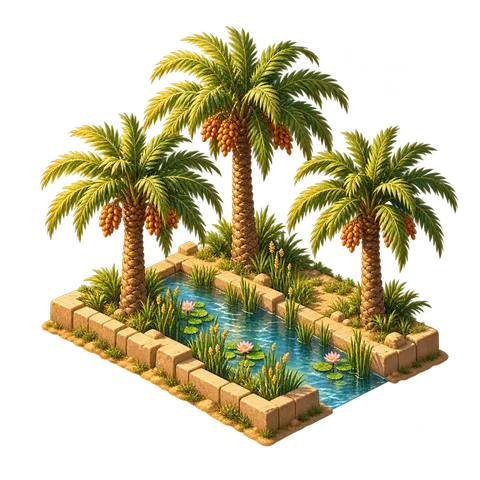
Palm grove
Channels carry the river's water to fields and palm groves. Date palms give us fruit, shade, rope, baskets and roof beams.
How many different things can one plant give a city?
Read the full page about the palm grove · Find it on the map
Stop 3
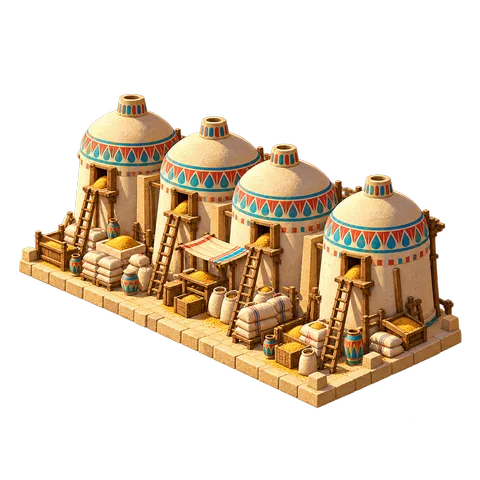
Granary
After the harvest, grain goes into domed granaries. Full granaries mean bread and beer all year, even after a poor flood.
Why would a city store food for a bad year?
Stop 4
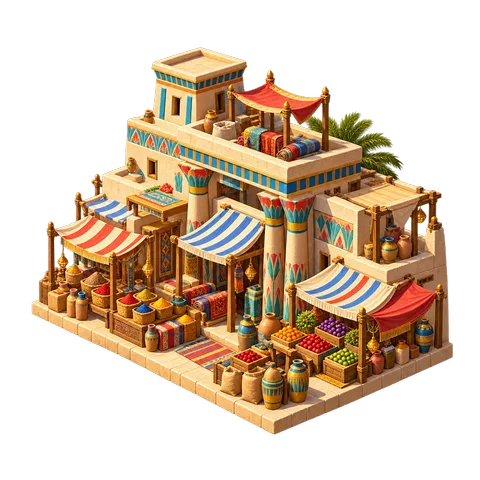
Market
There are no coins here. At the market people swap goods: sandals for grain, a basket for fish.
What would be hard about trading without money?
Stop 5
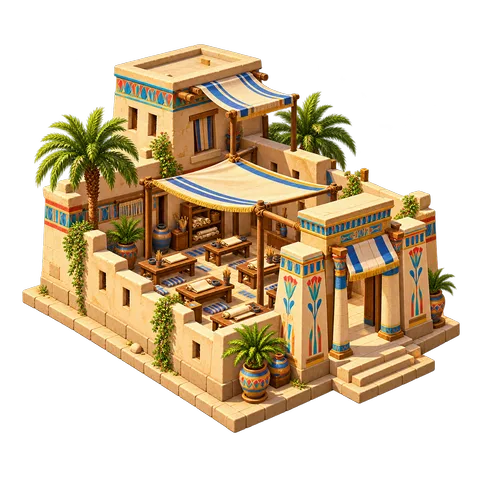
Scribe school
This is where I learned to write, after years of copying signs. Scribes keep the records that keep the city fair.
Why do cities need people who can read and write?
Read the full page about the scribe school · Find it on the map
Stop 6
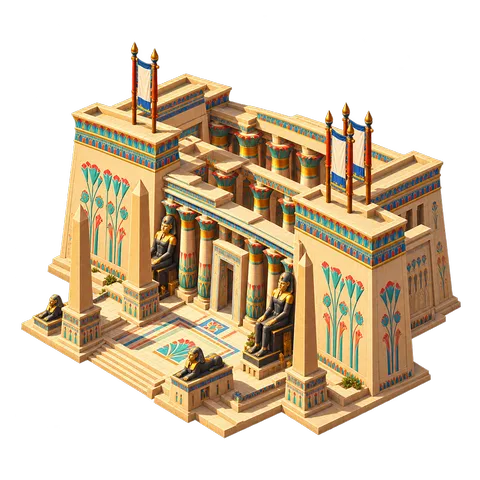
Hall of columns
In the temple, giant painted columns hold up the roof, like the Great Hypostyle Hall at Karnak, which has 134 of them.
How do you think builders raised such heavy columns?
Read the full page about the hall of columns · Find it on the map
Stop 7
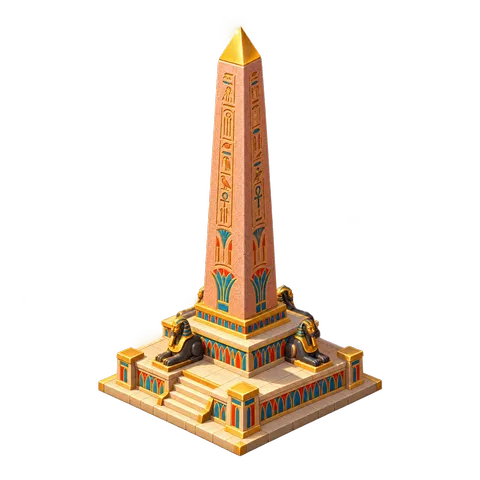
Obelisk
Each obelisk was cut from a single piece of granite and set up in pairs at the temple gates.
How might people have moved a stone this big without engines?
Stop 8
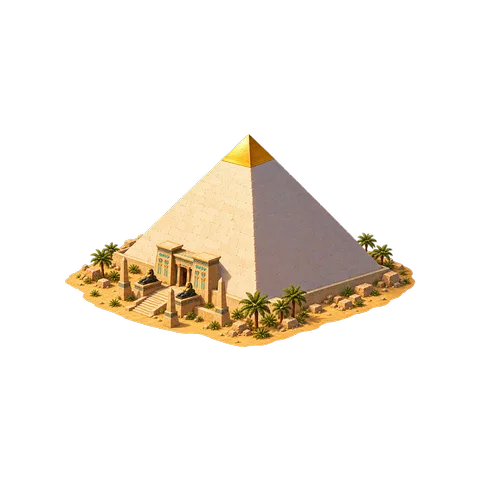
Pyramid
The Great Pyramid at Giza, a tomb for a pharaoh, was the tallest building on Earth for about 3,800 years.
Why do you think rulers wanted such huge tombs?
Think it over
- What would happen to this city if the Nile flood failed?
- Which job would you choose: farmer, scribe, builder or boat captain? Why?
- Which Egyptian idea do we still use today?
For a full lesson, see What does a city need to work?.
More tours
 Ancient Rome · 8 stopsRoman engineeringWater, roads and building methodsYour guide: stone carrier
 Modern Town · 8 stopsModern neighborhoodsGetting around, public spaces and access for everyoneYour guide: teen with a backpack
 Green World · 8 stopsEcological designImaginative ideas about water, plants and shared landYour guide: flower cart
 Robotic Future · 7 stopsHuman choices in robotic citiesTechnology, energy and who decidesYour guide: engineer
 Heavenly City · 10 stopsThe story of JesusThe good news of Jesus, from beginning to endYour guide: elder with a staff