Possible future How it would work
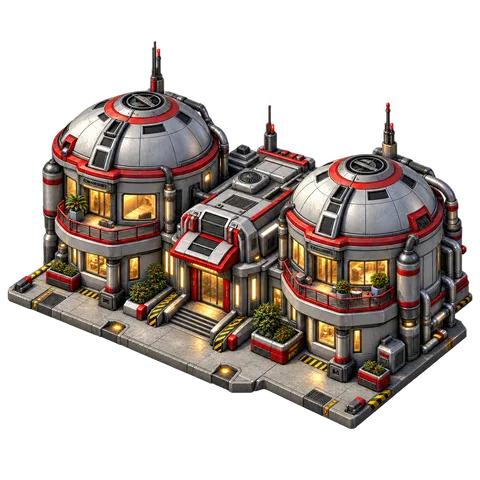
Rockets can only carry objects of a certain size. An expandable habitat is packed tightly for launch, then filled with air at its destination, swelling into a roomy home. Inside, the crew would sleep, eat, work and relax, with plants and a small garden near the entrance.
Real world Technology we already have
In 2016, an expandable module called BEAM (Bigelow Expandable Activity Module) was attached to the International Space Station and inflated. It was designed as a two-year test, but it performed so well that NASA kept it attached for years as a storage room. Its walls are made of many layers of strong fabrics, such as Kevlar-like materials, that protect against small space debris and keep air in.
Possible future Building and maintaining it
- Land the folded habitat with a robotic lander.
- Inflate it slowly, checking for leaks.
- Cover it with a thick layer of local soil (regolith) to block radiation and small meteorites.
- Connect it to power, life support and an airlock.
- Inspect the walls regularly for wear and repair any leaks.
Art In this artwork
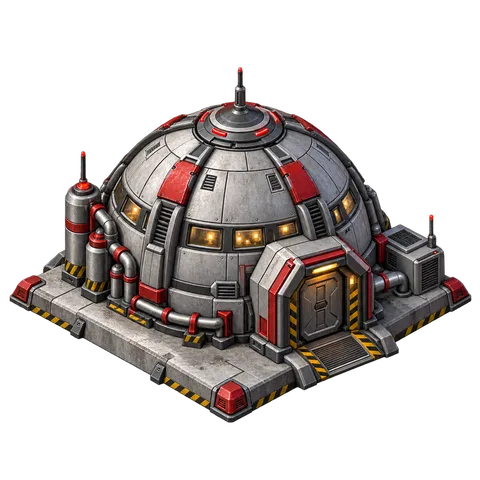
This illustration shows a rounded pod home with glowing windows and plants by the door.
Look closer
- Find the round door and windows.
- What could the pipes on the roof be for?
Think about it
- Would you trade space for convenience?
- Why might a fabric wall be safer than it sounds?
- What would you need in a home with no way to pop outside?
Key words
- Expandable habitat
- A home that is launched folded and inflated later.
- Regolith
- The loose, dusty soil on the Moon or Mars.
- Micrometeoroid
- A tiny, fast-moving piece of space rock.
Sources
The real-world facts on this page are based on these sources:
- NASA, Bigelow Expandable Activity Module (BEAM) on the International Space Station (2016)
- NASA Human Research Program, hazards of human spaceflight (radiation, isolation, distance, gravity, hostile environments)