Real world Why towns need playing fields
Team sports keep people active, teach teamwork and build friendships. The World Health Organization recommends that adults get at least 150 minutes of moderate activity a week, and local fields make that easy and affordable.
Real world Grass or artificial turf?
Natural grass is cooler on hot days, soaks up rain and supports insects and soil life, but it can be damaged by heavy use and needs mowing, watering and rest. Artificial turf can be used in all weather, but it gets much hotter in the sun, does not absorb heat or water in the same way, and some types shed tiny rubber or plastic pieces. Towns weigh up these trade-offs.
Real world How a field is built
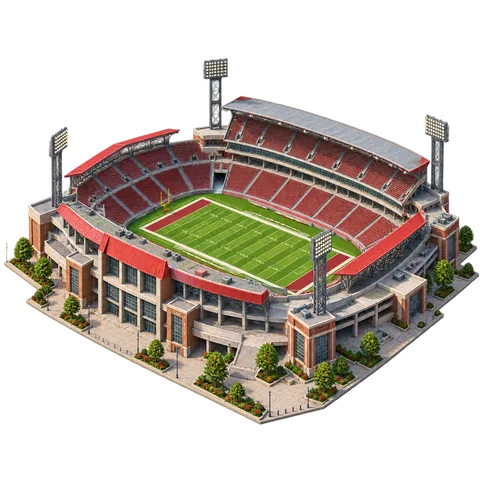
Under a good field is a layer of drainage: gravel and pipes that carry rainwater away so games are not canceled. Fences keep balls in, lights on tall poles allow evening games, and there are changing rooms, toilets and seating for spectators.
Art In this artwork
This illustration shows a fenced soccer field with goals and floodlights.
Look closer
- Find the floodlights. When would they be used?
- Notice the fence. What is it for?
Think about it
- Who gets to use a public field, and when?
- Would you choose grass or artificial turf? Why?
- How could a sports field also be used by people who do not play sport?
Key words
- Artificial turf
- A surface of plastic grass.
- Drainage
- Removing water from the ground.
- Floodlights
- Bright lights for evening play.
Sources
The facts on this page are based on these sources:
- World Health Organization, "Guidelines on physical activity and sedentary behavior" (2020)
- US Environmental Protection Agency, "Heat Island Effect"